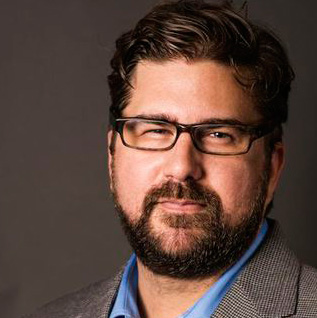
Attorney Cory Strolla mounted a passionate legal defense for Michael Dunn during the February 2014 “Loud Music Trial.” On Black Friday, 2012, Dunn shot 17-year-old Jordan Davis after a confrontation over Davis’s loud music escalated at a Jacksonville, Florida, convenience store parking lot. During opening statements, Strolla told jurors, “Dunn had every right under the law to be judged by 12, not carried by six.” Strolla referenced an old self-defense adage suggesting it’s better to face a jury of your peers than be delivered to your grave by pallbearers. While prosecution may indeed be preferable to death, I’ve never heard anyone who has faced homicide charges or served prison time quote that adage.
Using deadly force in self-defense is a life-and-death proposition. Defenders who are wrong about their justification for using deadly force face severe legal consequences. Criminal defense attorney Don West says, “Self-defense is an all-or-nothing proposition. You admit to the act but claim you were justified. If you were wrong, or misguided, or perceived things improperly, or if the prosecutor is able to poke holes in evidence that you are relying on, then that’s it—you’re convicted.”
Even armed defenders who are ultimately exonerated may still face a long, agonizing legal battle. No defendant wins a criminal prosecution; the best they can do is survive it. And it’s a rough journey. Don West has represented several armed defenders, and he has seen them cope with the shroud of uncertainty that falls upon a defendant in the criminal justice system. Don says, “The resources needed to fight the legal battle are extensive—the stamina, just the wherewithal to survive that process, which can be a year or two, or more, of waking up every morning, and just when you begin to think, ‘Hey it’s a pretty good day,’ you remember that you don’t know how many more days you have like that.”
In Lesson 1, you met Michael Drejka, who shot Markis McGlockton after McGlockton violently shoved him to the ground in a Clearwater, Florida, convenience store parking lot. A jury convicted Drejka of manslaughter, and the judge sentenced the 49-year-old to 20 years in prison. While awaiting trial, Drejka was evicted from his home, and he found it difficult to convince another landlord to rent to someone accused of manslaughter. Drejka’s lawyers had to petition the court to modify his restrictive geographic bond conditions so he could take advantage of a living arrangement in neighboring Hillsborough County.
You also learned about Amber Guyger, an off-duty Dallas, Texas police officer who shot Botham Jean, suspecting him of being an intruder when she mistakenly entered his apartment while thinking it was her own. At the end of Guyger’s 2019 trial, a jury convicted her of murder. Those same jurors, who witnessed Guyger’s heartfelt remorse and who likely believed the shooting resulted from a tragic misunderstanding, issued a light ten-year prison sentence. A civil jury in 2024, however, proved less sympathetic and hit Guyger with a $98.65 million verdict.
In Lesson 2, you met Ted Wafer, the man who shot a young woman who had been pounding on his front door shortly before 5 AM on a cold November morning in 2013. Less than a year later, a jury found Wafer guilty of both second-degree murder and manslaughter. A lenient judge, perhaps convinced the shooting was a terrible accident, sentenced Wafer to the minimum term possible according to the 15–30 year sentencing range, plus a mandatory two-year sentence required by Michigan law for a felony firearms charge. In a strange legal twist, the Michigan Supreme Court later ruled that people can’t be convicted of murder and manslaughter for the same homicide, and they vacated Wafer’s manslaughter conviction. The trial judge maintained Wafer’s 17-year sentence. Wafer will be eligible for parole in 2031. He’ll be 72 years old.
The good news is that many self-defense shootings result in relatively short investigations and no criminal charges. Don West says, “Good guy self-defense claims that go to trial are pretty rare, statistically.” Unfortunately, in a tense, life-or-death situation, good guys can make bad mistakes that lead to complicated legal battles. For Lesson 3, we’ll explore three controversial cases that resulted in arduous legal ordeals. We’ll go to Austin, Texas, where Daniel Perry spent a year in legal limbo while waiting to know if he’d be charged for the shooting death of Garrett Foster. Then we’ll travel to Springfield, Oregon, where Gerald Strebendt languished in jail while his attorney fought to exonerate him for the self-defense shooting of David Crofut. We’ll end in Jacksonville, Florida, where Marissa Alexander spent 1,065 days behind bars and endured an extraordinary legal drama for firing a single warning shot that injured no one.
***
In some cases, authorities recognize from the beginning that the defender justifiably used deadly force in self-defense. Melinda Herman protected herself and her seven-year-old twins by shooting a crowbar-wielding home invader five times. Walton County Sheriff Joe Chapman told reporters he was proud of Herman, saying, “This lady decided that she wasn’t going to be a victim, and I think everyone else looks at this and hopes they have the courage to do what she done.” Not everyone gets that deference. In other cases, the defender’s justification for using deadly force is more ambiguous—or controversial—and investigators aren’t so eager to heap praise on the defender.
Daniel Perry shot Garrett Foster during a tense encounter at a Black Lives Matter demonstration in Austin, Texas, on July 25, 2020. Perry, a ride-share driver, found himself surrounded by a group of protesters. Foster was one of those protesters, and he chose to march wearing tactical gear and carrying a rifle, as it is his legal right to do in Texas. When Foster approached Perry’s driver’s side window, Perry feared Foster meant to shoot him, so Perry rolled down his window and fired first. Law enforcement took Perry into custody, but after questioning, investigators released him that very night.
In the days following the shooting of Garrett Foster, gun-rights advocates vocally supported Perry’s right to defend himself against an armed aggressor. When Austin’s senior homicide detective, David Fuggit, interviewed Perry, he thought the shooter had a legitimate self-defense claim and did not recommend charges. But that didn’t mean Perry was off the hook. While social justice advocates expressed outrage, an investigation into the shooting quietly moved forward.
Meanwhile, an ambitious attorney named Jose Garza campaigned to become the Travis County District Attorney. As a campaign promise, Garza pledged to convene a grand jury to consider charges in the Perry case. In November of 2020, Garza won his election, and in July 2021, Garza convinced a grand jury to indict Perry for murder. Don West says that in a grand jury presentation, the prosecutor chooses what evidence to include, and witnesses aren’t subject to cross-examination. Unlike a trial, in a grand jury proceeding, the defendant’s attorneys have virtually no opportunity to participate. Don says, “It is no surprise Perry would be indicted if the prosecutor genuinely wanted it to happen. The prosecutor holds all the cards.”
In the year between the shooting and the indictment, investigators discovered digital messages and social media posts that cast Perry’s motivations in a new light. A month before the shooting, Perry messaged a friend, writing, “I might go to Dallas to shoot looters.” In another message, he wrote, “I might have to kill a few people on my way to work, they are rioting in front of my apartment complex.” The evidence made it appear as if Perry sought an opportunity to have a violent encounter with a protester. Those messages, combined with some inconsistencies in Perry’s statements, helped seal his fate, and a jury convicted him in April of 2023.
After Perry had served a little more than a year of his 25-year sentence, Texas Governor Greg Abbott pardoned the defender and restored his civil rights. Gubernatorial pardons in murder cases are exceedingly rare, and banking on a pardon doesn’t constitute a very viable legal defense strategy. While Perry escaped the full consequences of his conviction, he still served more than a year in prison, and he suffered through legal limbo for nearly three years—first while waiting to learn if he would be charged, and then waiting for trial.
***
On January 29, 2014, Gerald Strebendt, a veteran Marine sniper and former UFC fighter known as “The Finishing Machine,” was struck by another motorist after dark on a remote section of highway outside Springfield, Oregon. The other motorist, David Crofut, got out of his car, shouting obscenities and making threats. Strebendt grabbed his cell phone and the rifle he had in the back of his truck. He dialed 9-1-1 and warned the angry motorist to back off. Crofut, who had a blood alcohol level of nearly twice the legal driving limit, kept advancing and got close enough to touch the barrel of the rifle. When Strebendt saw Crofut reaching into his pocket, he feared the aggressor had a gun, so he fired a single fatal headshot.
Authorities briefly detained Strebendt and released him after he refused to make detailed statements without a lawyer. They kept his cell phone—a clear sign that they meant to continue their investigation. Within two days, Strebendt hired attorney Mike Arnold, a scrappy former rugby player who relished a tough fight. With his client’s permission, Mike wrote a book about the legal defense. Mike writes, “My initial goal, of course, was to prevent this case from ever going to a grand jury. If the District Attorney did choose to take it to a grand jury, then the goal became avoiding indictment. If he was indicted, my goal then was to turn over every stone of evidence and work towards dismissal or a plea agreement. And if all else failed, I would need to be ready for trial.”
As Don West established, there’s not much a defense attorney can do to intervene with a grand jury, and because the District Attorney seemed hell-bent on prosecuting Strebendt, he obtained a murder indictment just over two months after the shooting. The judge in the case denied bond, so The Finishing Machine would sit in jail while his attorney mounted his legal defense.
The defense of Gerald Strebendt became a massive undertaking requiring several experts, including toxicologists, accident reconstructionists, use-of-force experts, and others. Soon, however, one element of the case overshadowed all others: Strebendt had a checkered past. Strebendt had incurred $580 in traffic tickets in less than two years, and he had a reputation for road rage. In July of the previous year, Strebendt was named as a defendant in a civil lawsuit alleging that he and another man robbed the plaintiff at gunpoint, taking his watch as part of some business dispute. Then there was a 2005 California murder trial where Strebendt testified that his friend Rafiel Torre, the defendant in the case, had asked him to kill his wife’s lover for $10,000. Strebendt said he refused the offer. Mike called this adverse character evidence “the parade of horribles.”
In an evidentiary hearing, Mike fought to keep the character evidence out, but the court reserved issuing an immediate ruling. With Strebendt languishing in jail, Mike pressed for the best plea deal he could. Acknowledging some of the weaknesses in their case, prosecutors offered a lesser charge of negligent homicide. The sentence would be four years and 10 months in prison, with credit for the 15 months Strebendt has already served. With months to go before trial, for Strebendt, the deal would only mean an extra 17 months behind bars.
When Mike presented Strebendt with the offer, his client said, “I’ve hardly seen the sun. I’ve been sitting in a concrete box … I’ve got no one to talk to. Nothing to do. They feed you s**t food, and you s**t it out where everyone can see you do it. They set me up to be demoralized and desperate to leave this place. Well, it’s worked. I’d rather plead guilty and do a few years than risk spending the rest of my life, or even another year until my trial in a s**t hole like this.”
After taking the deal, Strebendt told a reporter, “It’s basic math. It’s insurance that I don’t have to run the risk of a jury getting it wrong.” Mike issued a statement that read: “Today is a sad day for all involved, but I respect his decision to take control of his life by settling this case.”
***
Any unjustified discharge of a firearm can carry severe legal consequences, as Marissa Alexander learned on August 1, 2010, when she fired a single warning shot at her estranged husband, Rico Gray. Alexander had successfully petitioned for a restraining order against Gray, but she unexpectedly encountered him when she returned to their former marital home in Jacksonville, Florida, to retrieve personal items a few days after giving birth to a premature baby. At first, the interaction was cordial, but something triggered Gray, sending him into a “jealous rage,” as Alexander described it.
According to Alexander, Gray cornered her in the bathroom, where he tried to choke her. She escaped and fled to the garage, but she said she couldn’t open the garage door to leave, so instead, she retrieved a pistol from her vehicle and went back into the house, where she encountered Gray in the kitchen. Alexander said, “He saw me with my firearm, threatened me, and then that’s when I fired my warning, my shot.” Alexander’s shot struck the wall a few inches above Gray’s head.
Alexander felt that, because nobody was hurt, she had no reason to call the police, so she went back to work collecting her things. She didn’t expect Gray to report the incident, but he did. A swarm of police officers surrounded the house and demanded she come out with her hands up. After several hours of questioning, the police arrested Alexander, and soon, Duval County prosecutors issued a charge of aggravated assault with the discharge of a weapon. If a jury found Alexander guilty, the judge would be required to impose a 20-year sentence because of Florida’s old 10-20-life law. Don West says, “Marissa Alexander found herself right in the middle of this legal quagmire where her fate was largely driven by what the Florida legislature had done some years before regarding mandatory minimum sentences.”
Perhaps recognizing the draconian nature of a 20-year prison sentence for a crime where nobody suffered any injuries, the prosecutors proposed a plea deal. They offered to drop the charges to aggravated assault with the possession of a deadly weapon—rather than the discharge of a deadly weapon—which would only carry a three-year prison sentence. Alexander, confident her warning shot was justified, refused the bargain and faced a jury. They found her guilty. The judge imposed the minimum mandatory sentence, and soon Alexander found herself serving in prison with the promise of 20 years behind bars.
Alexander appealed her conviction. Don West says many people have a mistaken impression about what a successful post-conviction appeal accomplishes. Appellate judges don’t second-guess a jury’s verdict. Instead, they decide whether an error that occurred during trial was severe enough to impact the verdict. “It might be an extra year or more after the conviction that you’re in jail while the case is on appeal,” Don says. “When they decide, if they decide there is sufficient error, the case is remanded—not to have the accused go free—but it’s remanded to the trial court for a new trial.”
After Alexander served a thousand days of her 20-year prison sentence, the appellate court ruled that the trial judge gave an improper jury instruction in her case, which qualified as sufficient error, and they remanded the case for a new trial. Alexander was released from the Lowell Correctional Institution, and she spent the next two years wearing an ankle monitor on house arrest. Alexander told reporter Larry Hannan that prison is “exactly what it’s meant to be. You have to live by somebody else’s rules, and you’re never alone.” As a parent, Alexander said the hardest part was “not knowing where your baby girl is, not knowing who’s watching her.”
While Alexander was on house arrest, her legal team wrangled with prosecutors and prepared for a new trial. In the end, prosecutors offered their initial plea bargain: a reduced charge with a three-year sentence. Because Alexander would have credit for time served, the offer meant pleading guilty and enduring a final 65 days in prison. She took the deal.
***
In the United States, the law considers people accused of crimes innocent until proven guilty. When Marissa Alexander talked about enduring her prosecution, she said, “It really feels like it’s a situation where you are guilty … You’re already guilty. You’ve got to prove your way innocent.” Technically and legally, the prosecutor has to prove guilt beyond a reasonable doubt, but as Don West says, once you’re a suspect in a crime, the prosecutors hold all the cards, and you lose control over your fate and your future.
Doug Deaton, an expert witness and veteran of law enforcement, compares being a defendant in a criminal case to being a player in a field sport such as football or soccer. “As long as you’re on the sideline,” he says, “you’re not involved in the game. You’re not playing. But the minute you decide to step onto the field, when it comes to self-defense and use of force, the problem is you don’t get to step off the field again until that game is finished and completely finished.” If you don’t understand the rules of the game, you’re unlikely to win—or even survive.
Here is how Marissa Alexander describes being caught in the criminal justice system: “It’s like an octopus. It’s just wrapping itself around you, and it’s so difficult, once you’re in, it is so very difficult to get out of it.”
If you do wind up tangled in the criminal justice system, Don West says it’s critical to have a good defense attorney, but even then, there is only so much a lawyer can do to mitigate. “We don’t make up the facts,” Don says. “We can’t change the facts. We help you deal, in the most successful way, with the facts.”
In his book about the legal defense of Gerald Strebendt, Mike Arnold writes, “Seeing what happened to Gerald has really made me think twice about carrying my gun.” People often use the term “think twice” to advise against a particular action. When Mike writes “think twice,” I don’t believe he means that responsible gun owners shouldn’t carry; I think he means that they should literally think hard about the legal consequences of using deadly force, and consider whether the armed lifestyle is right for them. I’d suggest armed defenders should reconsider their choice to carry every day—each time they wear their firearm out in the world. When you think twice about being an armed defender, when you understand the legal consequences, then you are more likely to avoid confrontations that could devolve into violence, and you become a safer, more responsible concealed carrier.
Don says, “I think as people become more aware of what the criminal justice process would mean if they wound up in the middle of it, what an incredible overwhelming responsibility it is to carry a gun, then they would realize that you have to have the right mindset and the right training. You have to be able to make good decisions under stress. And you have to know when to use a firearm and when not to.”