Posted on October 27, 2025
Why You Should Consider Taking a Defensive Shooting Course
By: Karen Hunter
Owning a Gun is Not Enough
Owning a firearm does not automatically equip you to handle a threat situation. If you unfortunately ever find yourself in a position where you must neutralize a threat, your gun is not an absolute equalizer. Your threat may also have a firearm and possibly be better skilled than you. A firearm performs only as well as the hands it is in.
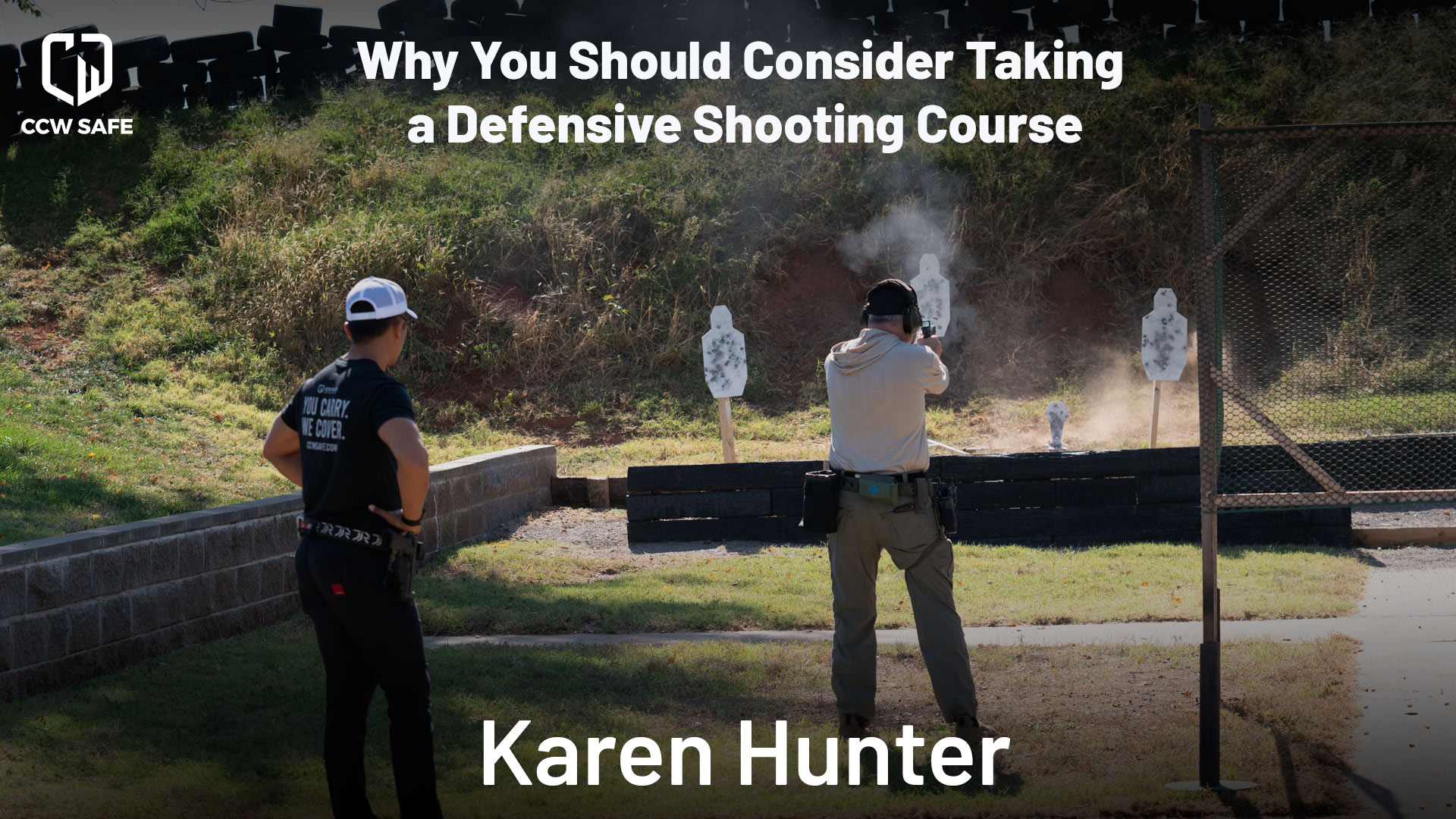
Defensive shooting courses are an essential investment in skills, confidence, and responsibility. These courses go far beyond basic range and static shooting practice. Defensive shooting courses equip you with proper defensive mindset, shooting techniques, stress inoculation, and situational awareness, to handle high-stress encounters effectively.
Real-World Training That Prepares You for the Unexpected
One of the primary benefits of a defensive shooting course is learning to handle a firearm safely and effectively under pressure. Unlike static range practice, which focuses on shooting stationary targets in a controlled environment, defensive shooting courses simulate real-world scenarios. For instance, you might practice drawing your firearm from a concealed holster while moving to cover, engaging multiple targets, or shooting in low-light conditions. These drills replicate the chaos of a real threat, where split-second decisions are critical. You will engage in drills that demonstrate how quickly an attacker can close a foot distance, teaching you to react swiftly and accurately. By training in such dynamic scenarios, you quickly learn where your defensive training gaps are and what you need to work on. Defensive shooting courses aid in developing the confidence and the abilities needed to perform under stress which could prove to be lifesaving skills.
Situational awareness is another cornerstone of defensive shooting training. Your firearm does not come with a cape and does not make you instantly invincible. Your primary goal should always be avoidance and never needing to draw your gun. These courses teach you to scan your environment for potential threats, identify escape routes, and recognize pre-attack indicators, such as an individual’s aggressive posture or unusual behavior. Instructors may use scenario based training and role-playing exercises where a “suspect” exhibits suspicious actions, prompting you to decide whether to engage, de-escalate, or retreat. This training sharpens your ability to assess risks in real time, potentially preventing confrontation. A 2023 study by the National Institute of Justice found that individuals trained in situational awareness were 40% more likely to avoid physical altercations compared to untrained individuals.
Understanding Legal and Psychological Responsibility
Understanding legal and ethical responsibilities of using a firearm is another critical component. Laws governing self-defense vary significantly by jurisdiction. Some states impose a “duty to retreat,” requiring you to attempt escape before using lethal force, while others uphold “stand your ground” principles. Defensive shooting courses that include classroom sessions led by legal experts or former law enforcement officers who explain these nuances are highly recommended.
These courses also address the ethical weight of taking a life, encouraging you to prioritize de-escalation and use force only as a last resort. This knowledge ensures you act within the law and avoid devastating legal or moral repercussions. The psychological demands of a life-threatening encounter can be overwhelming, with adrenaline, fear, and tunnel vision impairing decision-making.
A Path Toward Skill Development and Responsible Community
Defensive shooting courses prepare you for these challenges through stress-induced training. Some programs use timed drills or simulated attacks with non-lethal force on force training to mimic real-world pressure. Instructors may shout commands or introduce unexpected obstacles, teaching you to control your breathing and maintain focus. A 2022 report by the American Psychological Association noted that stress inoculation training, like that in defensive shooting courses, improves performance in high-pressure situations by up to 30%. This mental conditioning can mean the difference between being paralyzed by fear in a crisis or responding with clarity.
Defensive training courses also foster a sense of community among participants. Training alongside others, from first-time gun owners to seasoned shooters, creates opportunities to share experiences and learn from diverse perspectives. Instructors, often with military or law enforcement backgrounds, bring real-world insights. For example, a former SWAT officer might share tactics for clearing a room safely, enhancing your understanding of practical applications. This collaborative environment reinforces responsible firearm ownership and builds a network of likeminded individuals committed to safety.
Take Ownership of Your Safety
Many programs offer tiered training, from beginner courses focusing on fundamentals to advanced classes covering urban combat tactics. Training facilities such as Gunsitew and the Sig Sauer Academy offer courses for beginners and more advanced courses, allowing you to progress at your own pace. While the cost and time commitment may concern some, the long-term benefits outweigh these factors. The price of solid instruction is well worth it compared to the potential consequences of being unprepared.
Ultimately, a defensive shooting course empowers you to take control of your personal safety. Law enforcement response times can average 7-10 minutes and threats often emerge without warning. By training to defend yourself, you gain peace of mind and the ability to protect your loved ones. A defensive shooting course is a vital step for anyone serious about personal safety and responsible firearm ownership.