Posted on March 31, 2026
Alexander Weiss Case Brief
By: Shawn Vincent
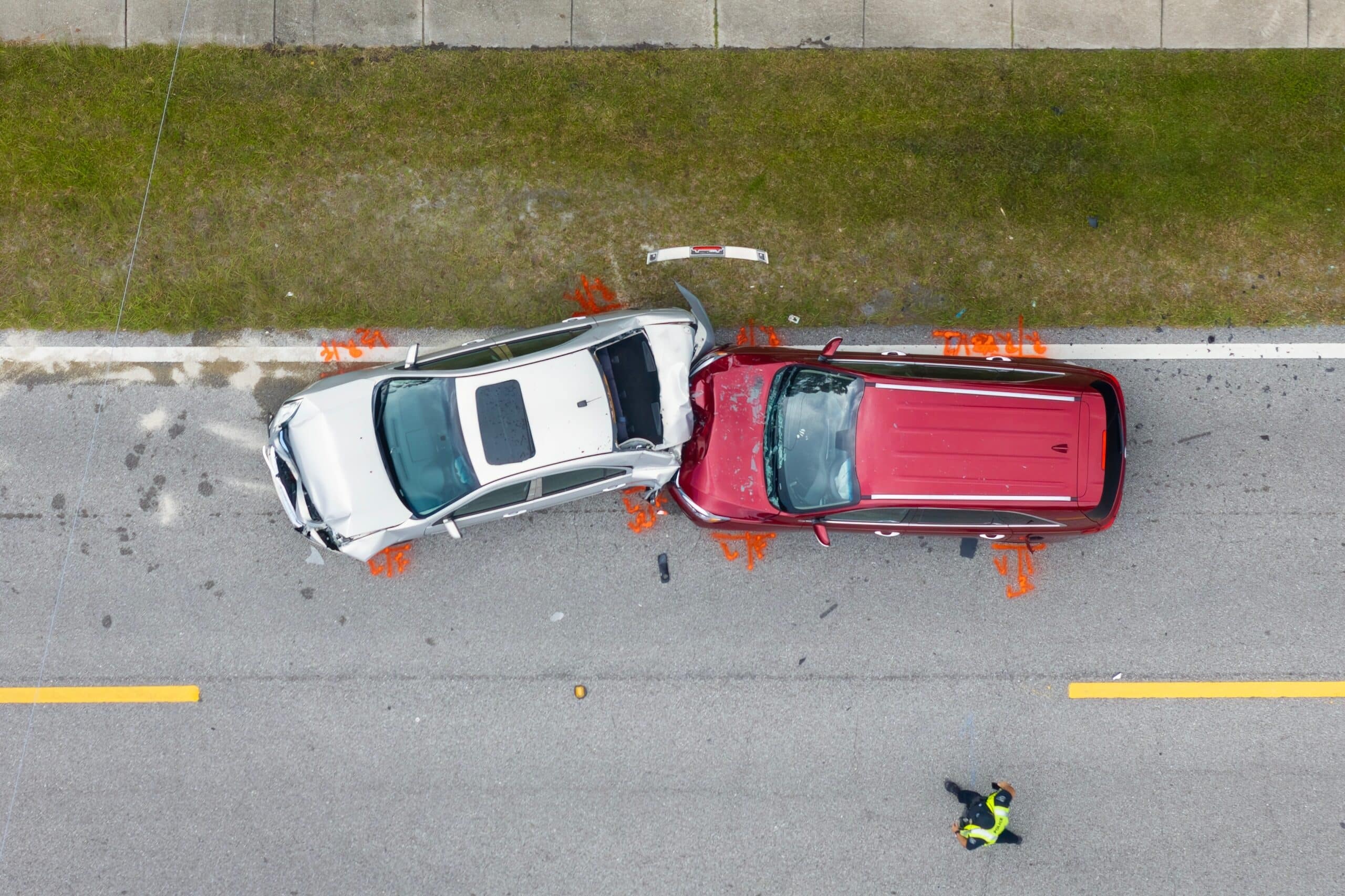
On a cold January morning in 2018, Alexander Weiss, a 26-year-old construction worker in Rochester, Minnesota, witnessed a silver Chevy Cavalier rocket through an icy intersection and slam sideways into a curb. Weiss pulled over in front of the stricken car, intending to offer help. Before he could get out, the Cavalier’s driver revved the engine and lurched forward, colliding forcefully with Weiss’s Subaru.
Weiss stepped out expecting to exchange insurance information. He was met instead by the Cavalier’s passenger, 18-year-old Noah Dukart, who emerged with shoulders hunched and fists balled, blaming Weiss for the crash. When Weiss said he intended to call the police, Dukart threatened to kill him.
Weiss went back to his still-running car, reached inside, and retrieved two items: his cell phone and the Glock pistol he kept in the glove compartment. Then, believing he was legally required to remain at the scene of a collision, he stepped back out to address the other party.
Things escalated quickly. The Cavalier’s driver, 17-year-old Muhammad Rahim, had also exited the vehicle and joined Dukart. The two teenagers maneuvered until they stood between Weiss and his car, blocking his path. Weiss warned them he had a gun, then drew the pistol and pointed it toward the ground. Rahim laughed, said “That’s not even a real gun,” and spat on Weiss. According to Weiss’s testimony, Rahim then reached for the weapon. Weiss raised the firearm, chambered a round, and aimed it at Rahim’s chest. Dukart testified that Rahim’s last words were “Do it then.”
Weiss fired once. The shot was fatal.
The Olmsted County Attorney’s Office charged Weiss with second-degree murder. The case went to trial twice, and most ended in a mistrial, with a hung jury unable to reach a unanimous verdict. A juror from the second trial told reporters that the majority had favored acquittal. After two mistrials, prosecutors dropped the charges, while publicly stating their belief that the shooting was unjustified.
Lessons for Armed Defenders
Don’t Shoot Before the Threat Is Imminent (Lesson #6)
Unarmed, with a gun pointed at his chest, Rahim didn’t pose an immediate threat. At that point, had Rahim made an aggressive move toward Weiss, the defender might have had a more reasonable belief that he faced the imminent threat of great bodily harm or death. However, in the tense moment of the standoff, as Rahim waited for Weiss to respond, the window of justification had not yet opened. Steve Moses says, “Even though the other person said, ‘Do it then,’ it is very hard to defend the decision to fire without evidence that the attacker was coming.” Don West agrees, “If it’s a serious statement, then it’s asking for assisted suicide—but it’s more likely a type of taunting intended to emasculate Weiss without any real expectation of it happening. Either way, it’s not self-defense for the shooter.” An aggressor cannot open the window of justification with words alone.
Don’t Stand Your Ground (Lesson #15)
Minnesota is a duty-to-retreat state, which means a defender must make a reasonable attempt to safely escape a threat before resorting to deadly force. Weiss had a clear opportunity to satisfy that obligation after Dukart threatened him, and he walked back to his running car. Criminal defense attorney Don West, National Trial Counsel for CCW Safe, frames it simply: “You’re pretty safe in your car if they don’t have a weapon. There’s nothing to suggest his car was disabled, that he couldn’t have just driven away.” Prosecutors argued he could have locked the doors and called 9-1-1. Instead, he pocketed the gun and walked back into the confrontation. That single choice made every subsequent use of force far harder to justify in court—and transformed what might have been a defensible situation into a legal nightmare. Even in states without an affirmative legal duty to retreat, juries often find armed defenders acted more reasonably when they try to retreat safely before resorting to deadly force.
Don’t Return to the Fight (Lesson #16)
The most legally damaging self-defense cases often share a common pattern: the defender breaks contact, retreats to a safer position, arms themselves, and then voluntarily returns to the threat. Returning to a confrontation with a firearm signals to jurors that you had control of the situation, exercised agency, and chose to re-engage. Don West puts it directly: “Don’t go back to the fight. If the aggressor follows you and forces a confrontation, you can make a good-faith argument that you tried to avoid the situation, and your self-defense claim will be built on a more solid foundation.” The question at the center of both Weiss trials was not whether Rahim was aggressive— it was whether Weiss responded reasonably to an unarmed threat.
Don’t Assume an Aggressor Is Rational (Lesson #13)
Dukart had taken non-prescription Xanax the night before the collision. According to testimony, the drug made Dukart feel like he “didn’t care about anything.” His response to a routine fender-bender—storming out with balled fists, issuing death threats, refusing all reasonable engagement—was, as Don West observed, “completely out of kilter. It was the wrong response.”
Had Weiss recognized the signs that the other party appeared irrational, he might have gotten back in his car, driven a safe distance away, and called police. Instead, he attempted to manage the confrontation with his pistol. Rahim’s behavior was equally telling: he dismissed the display of a loaded firearm, spat at the man holding it, and reached for the weapon. Rational people don’t do that. Recognizing irrational behavior gives alert armed defenders an early offramp from a potentially disastrous confrontation.
Don’t Brandish Your Firearm (Lesson #21)
Under the law, displaying a firearm to intimidate or control a situation constitutes the threat of deadly force, and it requires similar legal justification as pulling the trigger. Brandishing a weapon before a threat becomes imminent can itself be a criminal act, and it can undermine a self-defense claim by making the defender appear to be the aggressor. When Weiss drew his Glock and pointed it toward the ground, the confrontation had not yet crossed the threshold of imminent deadly threat. Two unarmed teenagers presented aggressive posturing and made threats, but neither had physically attacked him or produced a weapon. Rather than ending the confrontation, the premature display of the firearm escalated it to the point where Weiss felt he had no choice but to fire.
Don’t Say Foolish Things (Lesson #33)
When investigators and prosecutors look into a self-defense shooting, they examine everything that might reveal the defender’s mindset—not just what the defender says at the scene, but what they have projected about their attitude toward guns and violence long before the incident occurred. On the back of his car, Weiss displayed a bumper sticker that read: “Gun control means hitting your target.” Weiss’s sticker may have been intended as humor or as a Second Amendment statement, but in the hands of a prosecutor deciding whether to file murder charges, it became, in Don West’s words, “one more thing stacked against the defender.” As a concealed carrier, anything that could be interpreted as a cavalier or aggressive attitude toward firearms has the potential to undermine your legal defense when it matters most.