Posted on May 15, 2026
TSA – Flying with a Firearm
By: Karen Hunter
Flying with a firearm can feel intimidating causing many travelers to avoid it. I can tell you firsthand it is not the grueling, scary task it can seem to be. While avoiding it altogether may seem the easiest route, it is always best to never be in a position where you cannot protect yourself or your family.
Before traveling you must consider your destination. For domestic travel, gun laws vary by state. You must be certain that your destination will allow you to have possession of a firearm while you are there. Many states have adopted constitutional carry. This means that individuals who are legally eligible to possess a firearm do not need a license or permit to carry it concealed. Variations between states do exist such as age requirements or type of gun permitted, so it is important to make certain you meet the specified criteria. For non-constitutional carry states, you will need to make sure your license or permit allows you the ability to carry within that state.
If you are traveling internationally with a firearm, check the U.S. Customs and Border Protection website for information and requirements before travel. Many countries will not allow you to enter with a firearm even if you are only traveling through that country on the way to your final destination. If you plan to take your firearms or ammunition to another country, you should contact officials at that country’s embassy to learn about its regulations. Utilizing a travel agency can also be beneficial as they can assist with walking you through the customs process and paperwork.
You will need a hard-sided case with external locking points to transport your firearms TSA requires each locking point to have a lock. Most handgun cases have a two lock capacity, but I’ve seen long gun cases that accommodate four or more. Be certain to thoroughly check your case to ensure you have a lock for all locking points.
People assume that the lock for their gun case must be a TSA-approved lock. This is NOT accurate. You should make certain your lock is NOT TSA-approved. TSA-approved locks are identifiable by the Travel Sentry logo, which is a red diamond. These locks allow TSA agents to open the lock using a universal key for inspection purposes without damaging the lock or luggage. These locks are beneficial for luggage, but not for your gun case. You should be the only one with access to your locked gun case. The TSA policy states that the passenger checking the firearm must retain the key or lock combination to the firearm container. Under no circumstance is TSA permitted to open a firearm container without the passenger present.
Inside your gun case, your firearm and magazines must be unloaded. Unloaded magazines should be inside your gun case. Small arms ammunition (up to .75 caliber and shotgun shells of any gauge) must be packaged in a fiber (such as cardboard), wood, plastic, or metal box specifically designed to carry ammunition and declared to your airline. A good rule of thumb is to keep your ammunition in the original box inside your locked gun case. This is allowed domestically, but for international travel, they may require your ammunition to be in a separate locked, hard-sided container. Be sure to check with your airline as certain airlines have ammunition quantity limits.
Firearms, firearm parts, magazines, and ammunition must all be transported as checked baggage. Optics however are permitted in carry-on baggage. If you are traveling with more than one firearm. TSA allows multiple guns inside your gun case. Be certain to check with your airline as they could have a different policy or charge additional fees. For example, I have traveled with two handguns inside the same case that fit inside my suitcase – no charge. When I travel with a rifle case, it is typically counted as an additional bag fee or an oversized item fee. It’s always wise to check beforehand so you know what to expect at the ticket counter.
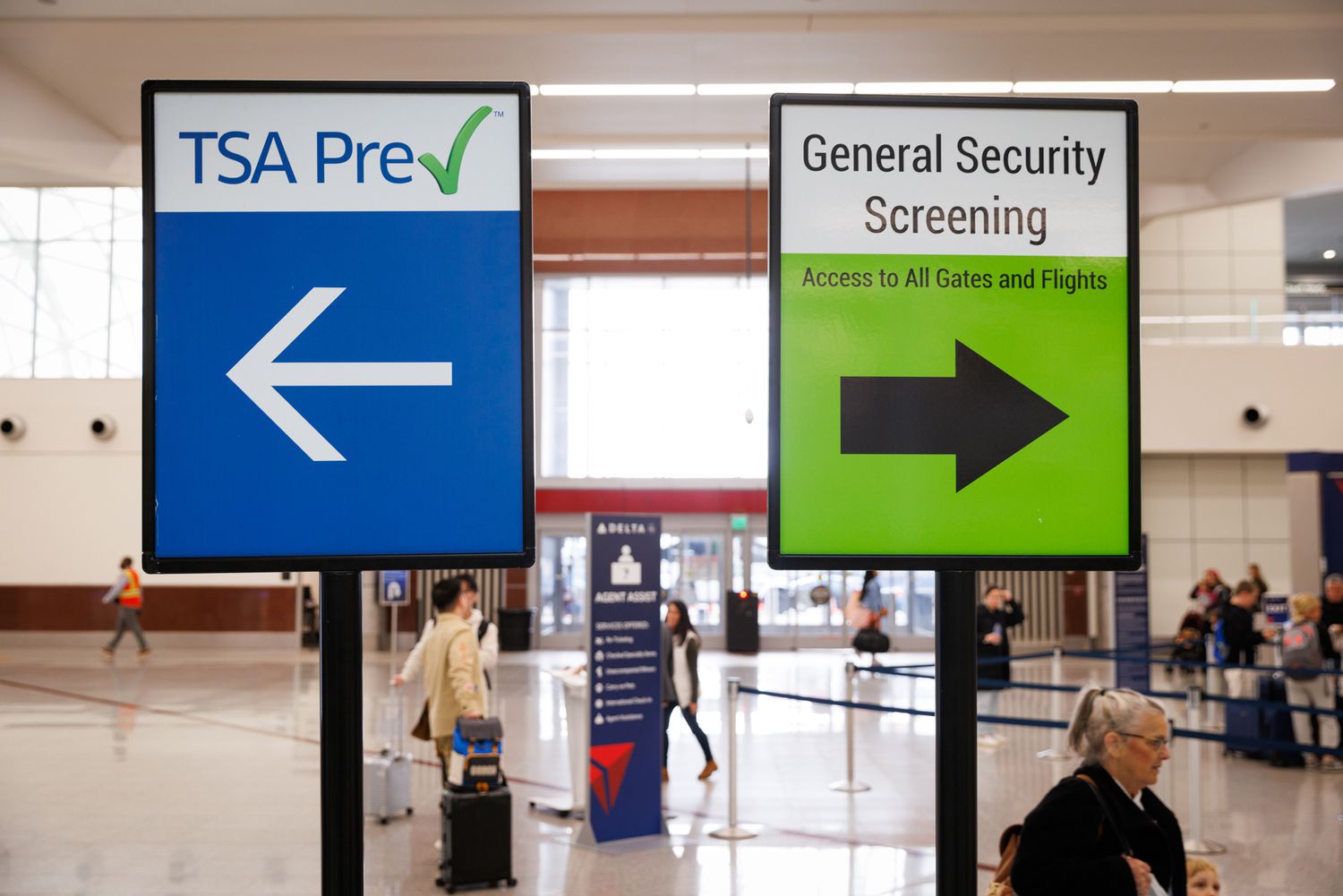
When you arrive at the airport you will want to enter the main customer service line. Typically when traveling with a firearm airlines will not allow early check-in and use of the bag drop. They will redirect you to the main customer service line to declare your firearm. At the ticket counter simply tell the agent, “I need to declare a firearm”. The agent will give you a Firearm Declaration form. Sign and date the form to confirm your firearm isn’t loaded. You will unlock and open your gun case, place the signed form inside, and then close and relock. Depending on the airline/airport you may be taken to a special screening area where they will screen your bags to ensure everything is safe. Typically most airlines send your bags to be screened and will ask you to wait nearby for a few minutes in case TSA needs to access your gun case. Once cleared you can then go to the TSA security checkpoint.
Once you reach your final destination your gun case, or bag with the locked gun case inside should be taken to the airline office for you to pick up. You will need to present identification to collect your held items. Ironically, this does not always happen so here is a pro tip – go to the baggage claim carousel first. I have had many instances where my suitcase containing my locked gun case came out with everyone else’s bags instead of going to the office. I would be waiting at the office while my suitcase is going round and round for anyone to take. If someone accidentally takes your bag, they have your gun case. So I will check the carousel first every time.
Flying with a firearm simply requires you to understand the rules, regulations, and process. It is well worth the time and effort to be able to travel with peace of mind. To learn more please visit tsa.gov.