Posted on July 2, 2026
Amber Guyger Case Brief
By: Shawn Vincent
Just before 10 p.m. on September 6, 2018, off-duty Dallas police officer Amber Guyger returned home to the South Side Flats apartments after a 13-and-a-half-hour shift. Still in uniform, she had spent part of her drive home on the phone with her police partner, Martin Rivera; the call ended as she pulled into the complex’s parking garage. Distracted and fatigued, she parked on the fourth floor instead of the third, where she lived, and walked to apartment 1478—directly above her own unit, 1378. The door, fitted with a hotel-style lock that did not always latch, was ajar. Guyger pushed it open, saw a “large silhouette” in the dark, and—believing she had encountered an intruder in her own home—drew her service weapon and fired twice. One round struck 26-year-old Botham Jean, an accountant from St. Lucia, in the chest. He had been sitting on his couch eating a bowl of ice cream. He died in his own living room.
Guyger’s realization came in real time on a frantic 9-1-1 call that ran roughly five and a half minutes. She read the number off the door—“I’m at apartment number 1478”—and repeated, some nineteen times, “I thought it was my apartment.” She pleaded for EMS and, prosecutors would later note, also worried aloud that she would lose her job. She was fired from the Dallas Police Department within days. She was first arrested for manslaughter; a grand jury later indicted her for murder.
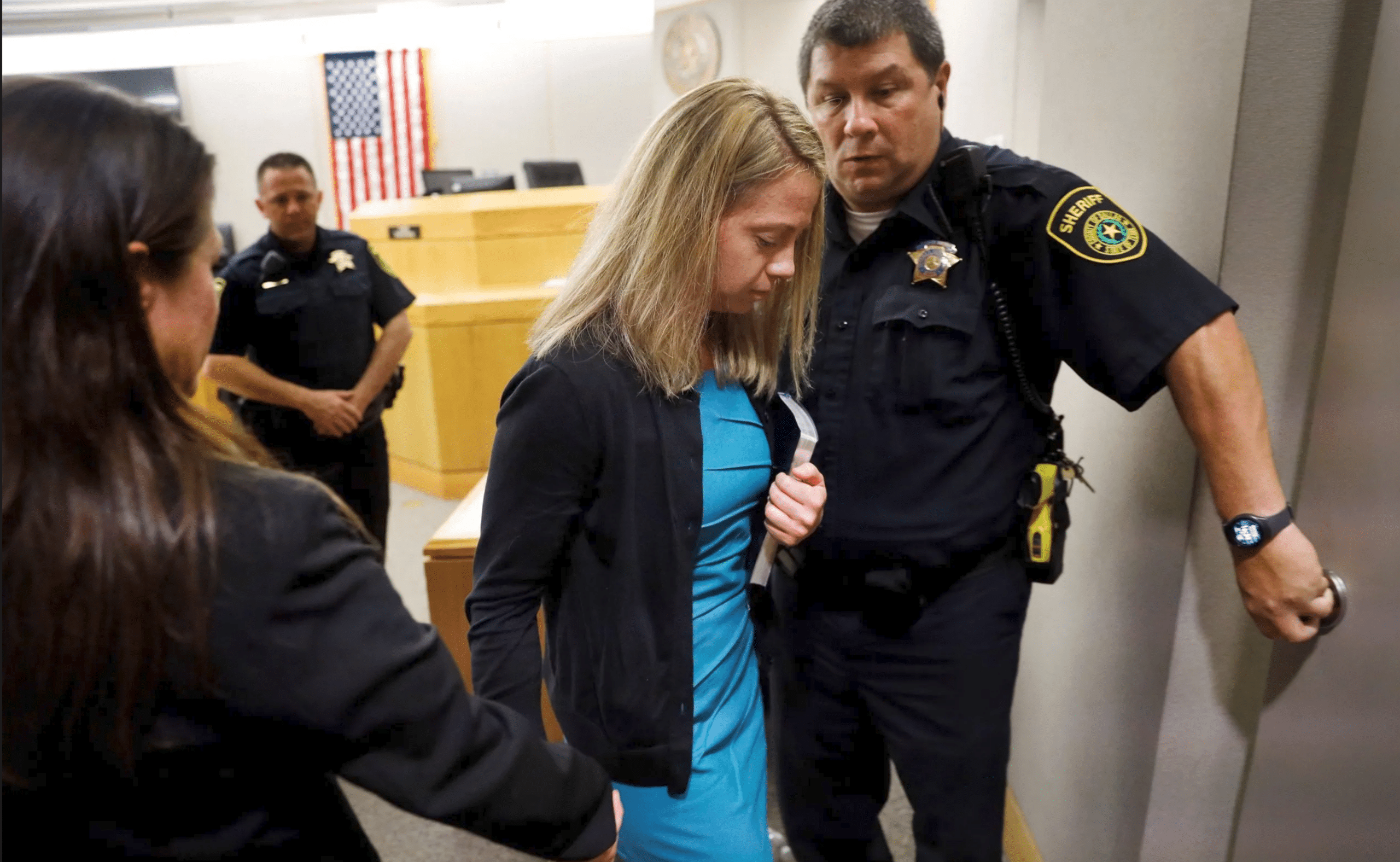
At her 2019 trial, Guyger’s defense rested on the mistake-of-fact doctrine and Texas’s Castle Doctrine: if the jury accepted that she truly believed she was in her own home confronting an intruder, her use of force might be judged as it would have been in that imagined scenario. Don West, National Trial Counsel for CCW Safe, explained the counterintuitive logic: “If the jury really believes that you’ve made that mistake in perception, then they’re supposed to accept that, and then under that set of perceived realities, decide whether the actions were reasonable.” Lead prosecutor Jason Hermus pressed her hard on cross-examination. He drew out that she intended to kill when she fired, that she had ignored a series of cues she was at the wrong door—a bright red doormat outside Jean’s unit that hers lacked, the apartment number, an electronic lock that flashed red—and that, by her own account, she could have backed away, taken cover, and called for backup instead of entering. On October 1, 2019, the jury convicted her of murder.
Lessons for Armed Defenders
Maintain Situational Awareness (Lesson #9)
Guyger’s case is an extreme illustration of what happens when an armed person stops paying attention to the world around them. Tired from a long shift and distracted by her phone, she missed the floor she parked on, the number on the door, the red mat, and the red light on the lock—an entire sequence of signals that she was not where she thought she was. Prosecutors itemized five such cues. By the time she perceived a “silhouette,” her flawed orientation had already decided what she was seeing: an intruder, rather than a stranger in his own home. Situational awareness is the discipline of noticing anomalies and letting them correct your assumptions before you act on them.
Don’t leave a place of safety to confront a threat (Lesson #14)
Even granting Guyger’s mistaken belief that an intruder was inside, she was never required to go in after him. She was standing in a hallway, outside the door, with every option still open. Prosecutors argued that her own police training called for her to take cover and call for backup before entering a space she believed held a burglar. On cross-examination, she conceded she could have backed out. Instead, she crossed the threshold and forced an encounter. A defender who advances into a perceived threat—rather than retreating, creating distance, and summoning help—surrenders the safest path available and narrows their lawful options to one.
Don’t shoot before the threat is imminent (Lesson #6)
Guyger fired at a shape in the dark. Botham Jean was unarmed, seated, and eating ice cream. He had neither the demonstrated intent nor any weapon that would make the threat of death or great bodily harm imminent.
The belief of imminent harm or death must be reasonable (Lesson #5)
The whole case turned on reasonableness. Texas law allowed the jury to evaluate Guyger’s conduct through the lens of the situation she believed she faced—but it still had to find that her perceptions and her response were objectively reasonable. The jury did not. A juror later said the panel agreed she had made a genuine mistake, which suggests they accepted she thought she was home and still concluded that shooting an indistinct figure under those circumstances was unreasonable.