Audio of Podcast
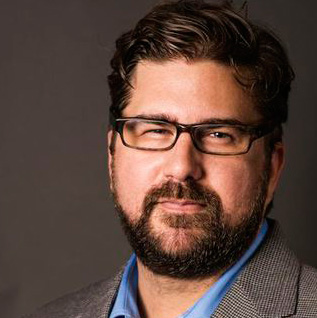
Law enforcement veteran and self-defense trainer John Hearne joins the podcast to warn against “kicking over rocks looking for snakes,’ or avoiding needless arguments with strangers that risk spiraling into violence.
Transcript of Podcast
Shawn Vincent:
Hey everybody, I’m Shawn Vincent. Thanks for joining the podcast today. We have reached lesson 12 of our 36 lessons for armed defenders. Lesson 12 is Don’t Start Needless Arguments. Our own Steve Moses has invited his friend John Hearne to join us. John’s a veteran of law enforcement. He is a sought-after self-defense instructor, and he does a lot of work on decision-making in life-and-death situations. That’s what the Armed Defender’s Dilemma is. Our topic today is great. Don’t start needless arguments. John Hearne describes that as kicking over rocks, looking for snakes. We’re going to explore some cases where we believe the armed defenders were looking for some snakes and kicking over rocks. And it’s the decision not to get involved in someone else’s business when there aren’t consequences that are worth the jeopardy associated with getting involved. So here’s my conversation with Don West, Steve Moses, and our guest, John Hearne, on Don’t Start Needless Arguments.
John Hearne:
How are we with profanity?
Shawn Vincent:
I like to limit the F word to three per episode.
John Hearne:
Okay.
Shawn Vincent:
Yeah, but you can say shit and damn all you like.
Don West:
And those are just guidelines, not rules.
Shawn Vincent:
On a show where we talk about homicides frequently and in depth, a couple of juicy swears every once in a while, I don’t think is offensive to anybody. So we’re in good hands here. So I’m going to let our audience know, Steve, you’ve invited another fantastic guest to the podcast. His name’s John Hearne. Would you introduce our audience to John?
Steve Moses:
Absolutely. It’s my pleasure. I’m very, very excited that he’s joining us. I’ve known John now, I think since about 2002. Met Tom in 99 and met John shortly after. He’s a great guy. He’s a friend. I did go to his website and looked at his bio. So I’ve got my cheat sheet here, so I’m going to read a few things. John has been a Range Master staff instructor since 2001. From 1992 to 2023, he was a federal law enforcement officer, and he retired as a field supervisor. He taught a variety of subjects for his agency, ranging from firearms to tactics to legal updates. He also taught use of force for his agency and also at the basic class at the police academy. In 2021, John founded Two Pillars Training and began to offer a unique curriculum focused on decision-making while shooting in addition to classic skills with pistols and carbines.
His interests include human performance under life-and-death stress, historic gunfights, crime data, and criminal typologies. He shoots at a very high level. John has shot competitively at the local and national level. He has several tactical conference top-10 finishes and numerous TacCon Lawman awards, with the exception of 2006. And he was recognized as a top practitioner at the National Tactical Invitational, which was a fantastic, fantastic opportunity for people to actually employ decision-making while shooting in many of those instances where they actually used live fire.
Shawn Vincent:
John, did he leave anything out?
John Hearne:
Just all around good guy. I mean, I don’t know who that guy was you just described, but he sounds pretty cool.
Shawn Vincent:
John, what happened to that guy in 2006? I got to ask.
John Hearne:
I get eked out every once in a while. Got to throw Steve a bone here and there, I guess.
Steve Moses:
That was me.
John Hearne:
That pool has always been pretty deep as far as the competition goes, and it just continues to get better every year.
Shawn Vincent:
Well, Steve, what was happening with you in 2006,
Steve Moses:
I won that baby. I won that bab,y and from there it was all down. I descended from there. There was no ascension whatsoever in my performance level.
Shawn Vincent:
John, you pay attention to self-defense cases. You remember the Michael Drejka parking lot shooting from Clearwater, Florida, from a few years ago?
John Hearne:
Is the handicap parking spot defender, right?
Shawn Vincent:
Yeah, that’s right. That’s right. As we’ve been talking about these different lessons, we find so many of them apply directly to that case. And there’s a case where Michael Drejka, he had a pet peeve about people parking in handicap parking spots, and there was one convenience store that he frequented, and he had a habit of starting needless arguments with people. In this particular case, he picks on Britany Jacobs who parked in that spot and he comes up to her car, he’s standing maybe three, four feet away from her opened window, and he’s giving her a piece of his mind. She shouts back. We don’t know what they say, but we can watch them on the security camera footage of this convenience store arguing with each other. And then Markeis McGlockton, that’s Britany Jacob’s partner and boyfriend, and father of some children with her. He comes out, sees them arguing.
He comes up, pushes Drejka to the ground pretty violently. Drejka pulls his pistol, aims it at McGlockton. McGlockton takes this step or two backwards, but Drejka had started this, he followed through, and he fires one fatal shot. It hits McGlockton in his heart, and he ends up dying shortly thereafter. So when we look at the lessons for the armed offender, Don and I talked for years about how we always, regardless of whether the defender was justified or not, the moment they pulled the trigger—and in the Drejka case, that’s a big controversy. A jury decided that he wasn’t. we can always go back and find two or three key decisions that the defender made before that life or death moment where they could have avoided the situation altogether and resisting the urge to pick a fight that you don’t need to have is certainly one of those decisions.
John Hearne:
I think that we have to accept the world as it is, right? We have to accept the fact that the world is not as we wish it was. It is as it is, right? We all have our little societal pet peeves. That gentleman had a fly under his bonnet about parking in handicap spots. There’s a fascinating essay that talks about how you can look at the decline of society based on whether people return their shopping carts to the corral when they’re done with their vehicles, right? That’s a pet peeve of mine. But I have no illusions that if somebody does not return their shopping cart to the corral, that that’s: number one, any of my business, and that, number two, I have to accept that there’s some people in this world that lack social grace, lack basic etiquette, for lack of better words, and it is not my job to try to educate them.
At a certain point, you walk past it, you go: ‘that’s unfortunate.” You maybe share that with your partner when you get home, “Hey, I saw this rude person,” but there’s nothing to be gained by initiating that confrontation. The odds are of that person going, “Oh, well, I’ll certainly return my cart to the shopping corral now, or I will never park in a handicap spot again.” I mean, who knew you weren’t supposed to park in a handicap spot? Obviously, the person pulled into a handicap spot. There was no amount of education or persuasion that was going to change them. And then he introduces the cultural element of apparently appearing to be a threat to the gentleman’s wife, domestic partner, whatever that status is. And most of us are going to be willing to defend that person. So again, there’s a long series of events preceding it.
I liken this to aviation accident reconstructions. There’s this thing called the Swiss Cheese Model that you have to fly through a lot … all the holes in the Swiss cheese have to line up for you to actually have a horrible event take place. And just simply not taking that flight would be a really good one, but just making sure that all those various potential off-ramps, for lack of better words, are considered and used. And again, that would be another reference to our mental model. What are my potential off-ramps to the situation I’m facing? And not opening my mouth is probably a pretty good off-ramp.
Shawn Vincent:
I want to reinforce what you said there about the Swiss cheese model. Multiple things have to go wrong to get a negative outcome when you’re trying to avoid that outcome. And so we’re going to go ahead and say that anytime someone’s shot, whether it was justifiable use of force or not, that’s a negative outcome—better than being shot yourself, but still a bad result if you could have prevented it. And going back to the very beginning, not picking that argument with somebody in the first place when you’re an armed defender, that’s the first piece of Swiss cheese almost, isn’t it?
John Hearne:
Absolutely. I mean, there’s probably better things that you can do with your life than defend the handicapped parking spots at the local convenience store. I mean, for the love of God, go pick up trash around the convenience stores if you’re so worried about it, that would actually be something contributory towards society as a whole.
Shawn Vincent:
Steve, in your work with your students, you may have heard this before: “But he has a right to do that. It’s his right to say that.” I see you shaking your head yes. What’s your response to that? And tell me a little bit, there’s a certain mindset that informs that, and it might go back to something you said, John, where you have to decide why you’re a concealed carrier. Is it to stop other nefarious folks from enforcing their will upon you in a violent way, criminals, or is it, as some people might do, they want to project their will upon others? Is that part of it, Steve?
Steve Moses:
Very much so. And an understanding, I think we’re going to talk about this topic shortly, is understanding that other people don’t think like we are. They don’t act like we are. And what may seem very rational to us may seem irrational to them. And once you get engaged in something like that, you basically have surrendered some power over the rest of your life to this other person and potentially the legal system. And so, just understanding that, what was it Woody Hayes said about the forward pass? He was a big fan of the rushing game, and what he said about the passing game is that three things can happen, and two are bad. Well, it may be an encounter with someone else, it may be one good thing that can happen in a hundred bad. And just understanding that the odds are stacked against you and you basically have given somebody some control over perhaps the rest of your life is significant. So the best thing to do is just not engage in that or if for some reason it started to disengage as nicely and politely as you can.
Don West:
John, I’m interested to know a guy who can clearly defend himself if need be, better than most people walking the face of the earth chooses, I suppose, to withdraw from certain societal conflicts just to avoid the minimal risk that it could escalate. I was riding my bike the other day, and the guy said, “Hey man, you should put your seat up a little higher.” Like that’s his business how high my seat is. And I guess I get to choose, do I tell him Mind your own business” or, “Hey, thanks a lot. That’s a good tip. I hadn’t thought of it.”
John Hearne:
This is a tangent, but I swear I’m going somewhere. Where I used to work, we did a lot of motor vehicle crash reconstruction, that sort of thing. And one of the realities about investigating motor vehicle accidents, we call it the “lug nut rule.” The vehicle with the most lug nuts is going to win every time. It does not matter whether you have the right of way. If the light turns green, and if you’re in your Prius and the light turns green and you go forward, was it right for you to proceed? Technically, legally, yes. But if there’s an 18-wheeler doing 70 miles an hour, he’s going to win that whether you’re right or not because he has the most lug nuts. That’s just a basic reality as far as that goes, right? So I think the analogy holds up in our situation. Just because you are technically, morally, ethically right does not mean that proceeding into that intersection, proceeding into that conflict is the wisest course of actions.
Sometimes you look to your left, you see the 18-wheeler still doing 50, 70 miles an hour through intersection and go, “Yeah, I could legally proceed, but it is in my clear and definitive best interest to just don’t do that. I’m just going to sit here, let him have his turn, maybe mutter under my breath about what a horrible driver he is, but I’m certainly not going to pursue that 18-wheeler and road rage and yell and scream and force him over to the side of the road.” That’s a long series of poor decisions that can be simply avoided by going, “Yeah, I may be right, but there’s not a win here on the table. If there’s not a win on the table for me, don’t play the game.”
Shawn Vincent:
I think it’s possible that Michael Drejka picked a fight with someone like Britany Jacobs because he thought he had more lug nuts, and he thought that if it went out of control, he was going to win. He didn’t count on somebody coming out of the store who is bigger than him and ready to throw him to the ground. And I think maybe an interesting part of this don’t pick needless arguments conversation is: Would he have been as bold if he weren’t carrying a firearm? And I’ll put that question to you, Steve. You mentioned frequently that if it’s not safe to go there without a gun, it’s not safe to go there with a gun, but we have Drejka here.
We just discussed this case, John, out of Lapeer, Michigan, where this guy had a little road rage interaction with somebody at a convenience store, actually went a block or two away, turned around, and came back to confront that guy. And part of the evidence at trial was that he sent a friend of his this photograph of a. .38 pistol and he said, “Think about getting one of these, a good gun for gas stations.” Suggesting that if we’re talking about his mental map or his schema, he anticipated a confrontation at a gas station where a gun might be necessary. And then when he saw one come up, he did everything he could to make sure it happened. And to talk about lug nuts, he showed his pistol. The other guy had a crowbar, and the melee was on until the defender shot the guy with the crowbar. The question is, does he go back? Does he start that argument if he’s not armed?
John Hearne:
I think it depends on the individual. There’s some people who have, number one, are physically capable of winning a fight barehanded. There’s also people that just basically lack a full awareness of what their capabilities are. So you’d be surprised. Some of the people that will pick fights with the police, as far as that stuff goes. I mean, you’ve got some chemically enhanced gentleman, maybe weighs 140 pounds on a good day and decides he’s going to resist a lawful arrest. And there’s like three dudes on scene that probably at least each weigh 200 pounds. And he’s thoroughly convinced that he can avoid everything that’s about to take place. And I guess we can cue the Morgan Freeman voice. He was, in fact, not able to avoid everything that was coming.
Shawn Vincent:
Let me appeal to your experience as a law enforcement officer, John. And that is when you’re in law enforcement, you don’t have the luxury of avoiding a confrontation if it’s your duty to intervene, right? You’re called out there, somebody’s causing some problem somewhere, and you need to be involved somehow. I assume there’s training …
John Hearne:
Hold on. Do I work for the Uvalde School District?
Shawn Vincent:
We’ll table that conversation.
John Hearne:
That was a little rough, sorry.
Shawn Vincent:
For the purpose of this conversation. Yeah. Yeah, no, but that’s actually such a great point because if you don’t do it, then it’s seen by society as a complete and utter failure of your responsibility. So what I’m getting at is: we look to our uniformed officers to go to where there’s trouble so that civilians don’t have to. And there’s a lot of situations that we’ve looked at where our solution was be a good witness, call law enforcement. There’s no reason for you to get involved in that potentially life-threatening situation, which is another way of saying we expect badged officers to go do that for us. So I think you’ve helped make my point there. I assume, John, that you guys had received a lot of training on how to approach somebody when you have to have a verbal confrontation with them.
John Hearne:
Yeah. I mean, I went through the classic. Actually, one of the most useful classes I ever took in my life was, I was living out in Las Vegas at the time, and we could attend any of their in-service training. I took basic Verbal Judo and advanced Verbal Judo, and it kind of informed—I did that in the late ’90s—and it informed everything that I did after that. And again, there are no perfect solutions, but if, in the traffic stop, if I’ve identified who I am, who I work for, the reason for the stop, what I need, at that point, anything that follows is largely on the person I’m interacting with. It doesn’t come into this confrontation of, “Why do you need my driver’s license? Why’d you stop me?” It’s like, “Hey, what are the hot-button issues going to be? Let’s get those out of the way so we can move on and accomplish the goal of what I need to get done today.”
Shawn Vincent:
They train you, I imagine, in de-escalation if you have somebody who’s ratcheting things up.
John Hearne:
So you’re going to cause me to rant here. So ever since 2015 or so, the persistent mythology of de-escalation has been pushed to the public that somehow there are these magic words that police officers can say that are going to get otherwise emotionally enraged people to comply and be decent people. De-escalation is an agreement between two individuals. I can say, “Hey, I’m Major Hearne with the National Park Service. I stopped you because we had this complaint that you’ve been drinking, you’ve been throwing beer bottles,” that sort of thing. But if he decides that he wants to escalate, there are no magic words that I can say. All I can do is create an opening for us to agree to kind of tone down the conversation. And as much as people sell de-escalation courses, that sort of thing, at a certain point, and that’s why I personally prefer the verbal judo stuff.
If I’ve done everything—I’ve worked my way through the general verbal stuff. The closing always was, “Is there anything that I can say or do today that’s going to get you to comply with my lawful order?” And if the answer is “go fornicate yourself,” that person has made it very clear that there’s not going to be an agreement reached on the side of the road and that force is going to have to be used. And here’s the shocker to everybody. The level of force used by that officer is almost always dictated by the offender. If that guy turns around, allows me to handcuff him safely, that’s great. If he produces a knife and threatens my life, it’s going to be deadly force. Again, those are decisions that are largely out of my hands and almost solely in the hands of the suspect.
Shawn Vincent:
Let me clarify because I enjoyed your rant, and I also noticed that you didn’t take us up on our invitation that you can use the F-word up to three times in our episode. So thanks for that. I assume you’re reserving those for later, but I think what you’re getting at is that there’s sort of an over-expectation that de-escalation, verbal de-escalation, is some magic spell that you can cast and that there’s always some opportunity to de-escalate a situation.
John Hearne:
Actually, when I taught use of force at the academy, part of that was de-escalation. And it was weird because the recruits weren’t allowed to have phones, but I’d always have somebody in there that was already an existing officer and needed in-service hours. And I’d say, “Okay, who has a cell phone with them?” And so they’d raise their hand. And I’m like, “Google the Wheaton Rule.” And they’d look at me quizzically, and I’m like, “No, I’m serious. Go Google the Wheaton Rule.” And he’d look at it, and he’d look at it, and he says, “The Wheaton rule is don’t be a dick.” Yes, that’s like the key to de-escalation. Don’t come in there heavy-handed, don’t be an ass, that sort of thing. That’s like the first rule of de-escalation is don’t put gasoline on the fire.
Don West:
Back in the day, I spent a few years working at the public defender’s office, so I saw every kind of case imaginable involving every kind of person imaginable. And a lot of them had significant prior records. They had long histories of whatever they did. Some of them were multidisciplinary, however, but a lot of them, you could sort of get the sense of who they were as a person by looking at their rap sheet. A lot of the cases I had resulted in an arrest for something—-a DUI, a pet theft, whatever it was—but there seemed to be a tag on charge, which often was more serious, of battery on a law enforcement officer or resisting arrest with violence. And lots and lots of times it’s exactly the way you describe, John, and that is that no matter what the officer did, this person wasn’t going to stop until they were absolutely forced to.
I did notice, however, after doing that for a few years, the same officers seemed to be rising to the surface, and that there are a handful of guys that couldn’t make any arrest at all, it seemed, without there also being a resisting arrest or a battery-on type case. And I got to the point of thinking that while deescalation is a two-way street, that a lot of it has to do with how the officer conducts him or herself when making that lawful arrest and whether they’re pushing buttons or whether they’re in a sense prompting a response. In self-defense law, we’d call that provocation, right? You can’t provoke somebody and then claim to defend yourself against them.
John Hearne:
Yeah. Hence the Wheaton Rule, right? Yeah. That’s the first rule. So the only thing, two thoughts on that. Number one, are there police officers with a badge who can show up to Sunday morning service at the Southern Baptist and give them five minutes of running their mouth and they have a full-blown riot on their hands? Yeah, people like that exist. I’m not saying that. On the other hand, if you are a good proactive officer, if you’re actually, I always call it kicking over rocks looking for snakes. If you’re one of the few guys that do that, your uses of force are going to go up proportionate with your arrest.
Let’s say you’re a good officer and 10% of people are going to resist no matter what you say. Well, if you’ve got a hundred arrests for the year and the other guy that you never see only has 10 for the year, it’s kind of the way that works out. So are there assholes in the world? Yeah, absolutely. But that view also tends to put a negative light on the proactive police officers. And if there’s anything this world needs more of in 2026, it’s proactive law enforcement. Proactive. I think that’s a term that’s largely something from a bygone era at this point.
Shawn Vincent:
I think what I wanted to illustrate with this conversation is that, and I think the term you used is what, a verbal jujitsu or verbal judo.
John Hearne:
Yeah.
Shawn Vincent:
Verbal judo. So there is a lot of strategy and tactics around managing a conflict verbally.
John Hearne:
I think that verbal judo is one of those things that’s largely been forgotten. That was done by Dr. George Thompson. He was actually an English PhD who got kind of a reserve slot with the PD. And when he went out, he was much more of the officer that Don first described. He kept stirring suspects up and somebody had a sit down and goes, “Dude, that’s not how we conduct business.” And Thompson’s whole point was, because he had, I think the PhD was in English, he’s like, “Those cops know stuff. Let me write down what they know so we can share this information with others as far as that goes.” I’m not sure how. I’ve only had verbal judo from the standpoint of a law enforcement perspective. I would probably have to stop and think about applying verbal judo to the civilian world, but it’s quite simple.
There’s verbal karate, and there’s verbal judo. In verbal judo, you redirect your opponent’s words in the direction that you wish to go. And in verbal karate, you’re just throwing kicks and punches and trying to do harm. So again, I guess the civilian application of that is direct the energy of the person you’re in confrontation with in a way that’s positive, at least for you, if not for both of you.
Shawn Vincent:
Sure. So you mentioned how the verbal judo was by a law enforcement officer for law enforcement officers. And I guess what I’m getting around to is that there’s a lot of training in LEO for how to, when you’re encountering somebody for the purpose of doing your duty or enforcing the law, there’s training in how to navigate that circumstance. Oh
John Hearne:
Yeah,
Shawn Vincent:
For sure. I think most armed defenders, most civilians don’t have the benefit of that training or even know that it’s out there. And why that’s important, because if you decide you’re going to pick a fight with somebody, and when I say pick a fight, I mean start a needless argument with somebody over their shopping cart in the parking lot or parking in a handicap spot, or as we might talk about before we wrap up, having their cell phone out during the previews of a movie theater. You know that case, right? Oh
John Hearne:
Yeah, from Florida. Yep.
Shawn Vincent:
Yeah. Curtis Reeves. So there’s a whole lot of training that law enforcement has to help them navigate those circumstances. As armed offenders, if we pick those fights or try to enforce a rule, quote unquote, we’re really, before it even gets to the point of violence, we’re opening a whole can of worms that we don’t know we’re getting ourselves into.
John Hearne:
In the immortal words of Forrest Gump, life is like a box of chocolates. You never know what you’re going to get.
Shawn Vincent:
Yeah, that’s great. That would be a good transition when we talk about our next topic about don’t assume that the aggressor is rational. But Steven, anything that John just talked about there with the verbal judo and everything?
Steve Moses:
No, I thought he did a great job. And one of the takes I kind of take for armed defenders is the fact that you need to understand that de-escalation may not work. And if you try to stay in there attempting to de-escalate the situation, it may escalate. There are some people that simply do not want to be de-escalated, and when that occurs, then that’s usually probably a Pretty good time to just disengage from the situation. Make that decision in advance that I’m going to watch what I’m going to say, and if this thing starts getting hot or I’m tempted to say something hot back to this guy, I’m not going to do it. And I’m going to try to create distance if creating distance is an option.
Shawn Vincent:
Let’s talk before we wrap up here, and we’re getting close, about the Curtis Reeves case. That’s the Movie Theater Popcorn Shooting from Wesley Chapel, Florida. Curtis Reeves was, in fact, a veteran of law enforcement. He had been a police captain. I have to check my notes, but I think he had some involvement with SWAT responses in his retirement. And this goes to what we were talking about, talking about cases that you don’t know everything about. We talked about those cases for years before I read from trial coverage that he ran security at the Busch Gardens Amusement Park for a long time. So here’s a guy who had a whole career of approaching people and correcting their behavior. But he’s retired now, and he’s in the movie with his wife. He’s waiting for his son to come join them. And the person in front of him is this guy, Chad Oulson, who’s probably 25 years younger than he is, on the phone with his babysitter, texting.
Curtis Reeves, I’m going to get it verbatim wrong, but essentially asked him, “Hey, put your phone away.” Chad Oulson doesn’t like that. And he tells him where to go stick it, essentially. And then Curtis Reeves goes, complains about him to movie theater management, comes back out. Chad Oulson’s put the phone away, but he couldn’t help himself. He leaned over his shoulder and said, “Oh, well, if I’d known you were going to put it away, I wouldn’t have went and told the manager on you.” Chad doesn’t like this. He gets really upset and angry. He stands up, he leans over the seat behind him where Curtis Reeves is sitting, he starts yelling. Eventually, he smacks the bucket of popcorn out of Curtis Reeves’ lap.
Chad Oulson’s wife, I imagine she’s seen her husband lose his temper before. She reaches over with her hand and tries to restrain him, puts her hand on his chest. We know that because Curtis Reeves shot her through the hand when he shot Chad Oulson in the chest, feeling old, a little infirm, in a seated position with this guy towering over him. A concealed carrier. He felt threatened. He felt there was nowhere to go. He thought he was going to get beat up next, and he fired one shot that killed Chad Oulson.
He was acquitted in the trial. It was a close call, I think. You talked earlier about, Don, now we look at the moment the trigger was pulled, and that can be controversial, and it can be justified. But then if you rewind it a few minutes, there were decisions that could have been made beforehand that could have precluded the entire event. And I think this is one of those instances where we have to ask, did Curtis Reeves start a needless argument?
Don West:
Well, at the end of the day, he was acquitted, but it was a very long journey to get to that point. This was in Florida. There was an extended stand-your-ground hearing, which is what it’s called. It’s really a self-defense immunity hearing. It’s a mini trial before the real trial starts, giving the judge an opportunity to dismiss the case. It can be as intense and prolonged because all of the witnesses at the self-defense immunity hearing may be a duplicate of what would eventually be called at trial. He went through that, and I think there was an appeal and then none of that worked favorably, and he winds up going to trial, which turns out to be, what do you think, Sean? Three years later, maybe four years later.
And then eventually he was acquitted, which I think just underscores the idea that it may have been a close call ultimately in his favor, but those years were not kind to him. He woke up every day wondering whether eventually he’d be convicted of murder and spend the rest of his life in prison. So when we look at these, we look, of course, the clear vision of hindsight, and we do see those moments where, clearly, he could have avoided this. It wouldn’t have taken a whole lot just to move to a different seat, just to simply decide. And it surprises me a bit because Reeves had all those years of experience in law enforcement and at working security. He dealt with people like this guy, not just in a public setting, but he’d probably seen those guys that go off, that become unpredictable because you push the button and they lose it.
So I would’ve expected him to exercise the judgment. He was there with his wife of, “Hey, let’s move another row back” or let’s do something different when it didn’t sort of de-escalate on its own.” So that surprised me and ultimately what he went through. I have no idea where the money came from. It would have been hundreds and hundreds.
Shawn Vincent:
For the defense? The legal defense?
Don West:
Hundreds of thousands of dollars. Yes.
Shawn Vincent:
John, I’m curious, is Don’s criticism fair from your point of view?
John Hearne:
I think that’s totally fair as far as that goes. I mean, obviously they were able to convince 12 jurors that he was, in fact, innocent. I don’t know about the testimony that was there, but a man of that experience will also know how that fight between a younger dude versus an older guy sitting in the seat. I mean, that strikes to me that the song I would sing would be a disparity of force argument.
Shawn Vincent:
You just described what I believe earned him that acquittal. The defense went all in on that disparity of force. They had people speak to the effects of aging. They really played up the disparity of force, which included the disparate positions the two parties were in.
John Hearne:
Yeah. And I don’t know if there’s … obviously we want to avoid that, getting that there as much as possible. If I had to guess, you also have, I think there’s profound cultural differences there. If he’s in his 70s, I mean, God knows how young he was policing. I had an interview with a gentleman that started policing in ‘63, and those guys just see the world differently. You can make an argument that maybe their mental map wasn’t updated as far as that stuff goes, but I think there was a time in this country that if somebody called you on your boorish behavior, good manners would dictate that you basically stop whatever you’re doing that was in fact boorish at the time. And unfortunately, we don’t seem to live in that world anymore.
Shawn Vincent:
Really interesting. But that goes around the beginning of this. John, you talked about the need to understand that we can’t control our world and not all of it’s going to please us.
John Hearne:
Hey, I have my shopping carts. The gentleman had his handicap spots. Apparently, his was a cell phone in the movie theater, which if you go to a movie theater in 2026, it is actually amazing how much boorish behavior is occurring in that movie theater.
Shawn Vincent:
Yeah. So the sad reality is: just don’t go if you know it’s going to spark anger in you. Yeah. There’s certain things that I know get me mad. I had to use my printer earlier today, and every time I use that freaking printer, there’s nothing more guaranteed to set me off than trying to get a printer to work. And if that printer was a man, I may have shot it today with all the bullshit it was giving me. I lost my temper.
Don West:
Let me just interject. I think that point is so well taken, John. Cultural differences. And it doesn’t take that many years, as fast as our world has been changing in the last 20 years, the last 25 years. We’ve come into the cell phone age and the internet age and the COVID age, and now we’re about to jump both feet into the AI age, and every day is something dramatically different than the day before. We have a greater, in my view, a greater generation gap than I can recall. That’s because I’m at the higher end of it, as opposed to somewhere in the middle where you guys are.
John Hearne:
Don you don’t look a day past 90. What are you worried about, man?
Don West:
That’s excellent. Thank you. I’m feeling that today. I feel just about 90. Thank you.
Shawn Vincent:
All right, everybody, that’s a podcast for today. I appreciate you listening through to the end. John’s going to join us for Lesson 13, which is Don’t Expect Aggressor to Be Rational. It’s sort of a part two of this Don’t Start Needless Arguments conversation. We’ll see you then. Until then, be smart, stay safe, and take care.