Posted on October 30, 2026
Who’s Really at the Door?
By:Shawn Vincent
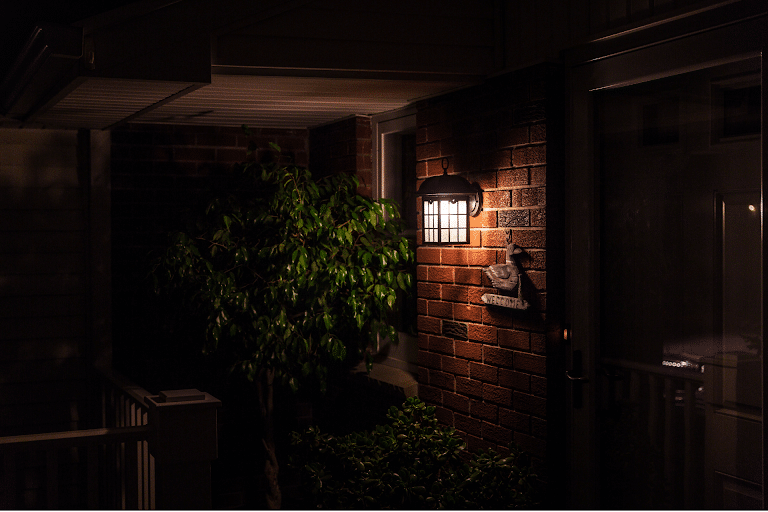
Ted Wafer shot and killed Renisha McBride through the locked screen door of his home in Dearborn Heights, Michigan, before dawn on November 2, 2013. Wafer, 54, an airport maintenance worker, had lived alone in the Detroit suburb since buying the house in 1994, and he had watched crime in the neighborhood rise. That night, he fell asleep in front of the television.
Around 3:45 a.m., pounding on the side door and then the front door woke him. His attorney told jurors it was a “boom, boom, boom pounding” and that “the floor was shaking.” Wafer believed more than one person was trying to get in. He couldn’t find his cell phone, which was in the pocket of his pants, hanging from the bathroom door. He turned off the television and the lights and, through the peephole, saw a “shadowy figure.”
Wafer picked up his pistol-grip Mossberg 12-gauge shotgun and opened the front door. He said the figure on the porch tried to push through the locked screen door. The shotgun fired, striking the stranger in the face. “It was them or me,” Wafer later testified. “I wasn’t going to cower in my house.”
After the shooting, Wafer found his phone and called 9-1-1. “I just shot somebody on my front porch with a shotgun banging on my door,” he told the dispatcher, and he hung up while the operator was still asking questions. When police arrived, he answered their questions without a lawyer. “I didn’t know there was a round in there,” he told a detective.
The stranger was 19-year-old Renisha McBride. Earlier that night, she had been drinking and smoking marijuana with a friend. Shortly before 1 a.m., she crashed her car into a parked vehicle in Detroit, likely injuring her head, and walked away before paramedics could treat her. A toxicology report put her blood-alcohol content at .22. When she reached Wafer’s porch about three hours later, prosecutors believed, she was confused and looking for help.
Prosecutors charged Wafer with second-degree murder. The judge refused to give jurors an instruction on using deadly force against someone breaking into a home, finding no evidence that McBride had been trying to break in. On August 7, 2014, a jury convicted Wafer of second-degree murder, manslaughter, and a felony firearm charge, and he was sentenced to 17 to 32 years in prison. In 2022, the Michigan Supreme Court vacated the manslaughter conviction on double-jeopardy grounds, but Wafer was resentenced to the same 17-year minimum.
Lessons for Armed Defenders
Get firearms and self-defense training (Lesson #2)
If Wafer told the detective the truth, he carried a shotgun to his front door without knowing whether it was loaded. Firearms instructor Steve Moses says that version of events means Wafer broke basic gun-safety rules: he failed to treat the gun as loaded, put his finger on the trigger, and let the muzzle cover a person he hadn’t decided to shoot. Steve suspects a startled Wafer clenched the pistol grip, and “it’s almost impossible to clench that hand without your trigger finger coming along with it.” Training makes safe handling automatic under stress. “You want to free up your mind under those kinds of circumstances to see what’s going on, process it correctly, and make the best possible decision,” Steve says. At trial, a prosecutor told jurors Wafer handled the shotgun “like a toy.”
Don’t assume an aggressor is rational (Lesson #13)
Wafer read the pounding as an attack by more than one intruder. “He did not know it was a 19-year-old who got caught in a car crash at 1 a.m.,” his attorney told jurors. Criminal defense attorney Don West agrees that Wafer “would not have known that she was drunk or high. He would see someone out of control and physically aggressive.” McBride was drunk, likely injured, and, her family believes, had mistaken his home for a friend’s. Steve Moses says that from her point of view, an opening door may have looked like an invitation: “Here’s a place I can go.” Wafer opened the door expecting a burglar and faced a disoriented 19-year-old whose next move he could not predict. Prosecutors argued she never posed an imminent threat, and the jury convicted him of murder.
Don’t open the door to trouble (Lesson #27)
Behind his locked front door, Wafer was relatively safe. He knew where the stranger was, and he had a shotgun if anyone broke in. Don West says that by “opening up the door, he went from a position of safety to a position of vulnerability,” and that “the threat wasn’t imminent until he actually opened the door to it.” Prosecutors pressed the same point at trial: “What about shutting the door? How about calling 9-1-1? No, what he does is he engages. He creates the confrontation.” Opening the door also put the shooting on the porch, where it was far harder to argue that McBride was breaking in. Prosecutors told jurors Wafer “created an unacceptably high risk of danger by arming himself and, under the circumstances, behaved so recklessly as to be guilty of murder or manslaughter.”
Self-defense cannot be accidental (Lesson #34)
Wafer twice told police the shotgun went off accidentally. Self-defense is an affirmative defense: the defender admits the shooting and argues it was justified. Don West says claiming an accident is essentially confessing to manslaughter, and prosecutors charged Wafer with statutory manslaughter alongside the murder count. A firearms expert testified the shotgun could not have fired on its own. At the end of the nine-day trial, the judge told jurors they could treat a prior false exculpatory statement as evidence of guilt.