Posted on August 24, 2026
Church Security Handgun Sights
By: Steve Moses
The stock sights on some handguns that work fine at the range may not work so well in certain church conditions, most especially for those of us with less-than-perfect eyesight even while wearing prescription eyewear. The ability to clearly see the sights of the defensive handgun is critical when it comes to engaging an active killer anywhere there are other people within striking range of a bullet. This is most especially true in a crowded sanctuary that may contain anywhere from dozens to hundreds to thousands of persons.
Many successful athletes use visualization (mental imagery followed by mental rehearsal in order to rehearse scenes, scenarios, strategies, tactics, and skills that do not require physically performing them). Visualization engages the brain in a manner that mimics real performance by activating the same neural pathways that would be used during physical execution. Church security team members should use visualization to create an imaginary “movie scene” that would take into consideration the following:
- What do my sights look like and can I see them well under various light conditions?
- What are the light conditions in my House of Worship in the sanctuary, hallways, class rooms, etc.?
- Are the lights frequently dimmed in the sanctuary if a video is being played?
- Are there night services, and is the parking lot bright enough that if I was forced to engage an active shooter at night I could see my sights?
- What does it look like when attendees are entering the sanctuary, seated in the sanctuary, and leaving the sanctuary? What would it look like if an active shooter or a domestic violence/personal conflict incident took place in the front, middle, or rear of the sanctuary? How would I make my way to it?
- If an incident such as the ones described takes place have I taken into consideration what the actions of the attendees might be? There is at least one video of an actual active shooter incident in which people remained seated, jumped up out the pews, ran away from the shooter, and even lay down on the floor.
The keys to prevailing in situations like those described above are mindset, tactics, skill, and equipment. The bad news is that I have learned and developed the first three, and the good news is that I can purchase or acquire the last one. In order to successfully engage a violent criminal actor I need to know exactly where the muzzle is pointed, and when it comes to making good hits at speed much past conversation distance it is the front sight or dot that allows me to confirm that it is aligned with the desired point of impact. This is most especially true with older shooters who are dealing with presbyopia, which is the normal loss of the ability to focus on close range objects (such as pistol sights).
One of the first things I do when I acquire a new handgun with sights that might be difficult to see in poor light conditions is replace them with a significantly more visible version. A plain black front sight can be painted with a bright orange automotive touch-up paint pen sold at automobile parts stores.
My semi-automatic pistols all have sights that feature a black rear sight and front sight with a luminescent insert in which a tritium rod is embedded. I can take or leave the tritium rod, but the luminescent insert is an absolute must for me. Ameriglo, Night Fision, and XS Sights offer these versions.
I find fiber-optic sights difficult to see in low light conditions. The versions that have large rods fiber-optic rods are harder to see than plain black sights in low-light conditions indoors unless there is a light source directly above them.
I prefer an electronic pistol-mounted optic (“PMO”) for church security work. The ability to focus on the deadly threat instead of the front sight is more likely to allow me to see a panicked attendee either in the line of fire or about to step in the line of fire. Another benefit is that is far easier to see an illuminated dot in low light conditions than iron sights. The downside to the PMO is that it is more likely to fail than an iron sight (iron sights can fail too but that is less likely to occur) and there is a distinct learning curve when it comes to using them effectively. This is not the time to scrimp on cost. I prefer the 6 MOA and circle-dot versions offered by Trijicon, Aimpoint, and Holosun.
It is more difficult for most people at first to shoot a handgun with a PMO than one with iron sights when it comes to quickly drawing it from the holster and getting the dot on target, and then keeping it there when firing rapidly. While this may be no big deal at the range, it is a very big deal for church security members who find themselves trying to find and keep the dot in the window under extremely stressful circumstances in which there is high probability that a missed shot will injure or kill an innocent attendee. I highly recommend that church security team members take one or more classes from a reputable firearms trainer known for not only his or her competence with the PMO but their ability to teach others, and then engage in weekly dry-fire practice at home and shoot one to two times a month before carrying a handgun with a PMO while doing church security. In addition to dry-fire practice at home and live-fire sessions, team members would benefit by participating in action shooting matches. Naysayers who claim that United States Practical Shooting Association (“USPSA”) and International Defensive Pistol Association (“IDPA”) matches can create training scars that will “get you killed in the street” are missing the point. This is a good way to work on shooting skills that include drawing quickly and getting good hits on targets at various distances, some of which may be partially occluded, and quickly moving from one position to another and immediately engaging a target without a discernible pause.
No serious member on a church security team would show up for a shift with a handgun that was not equipped with iron sights. The ugly truth is that many church security teams probably have at least one member that would be unable to see the iron sights on their gun during a chaotic and fast-moving critical incident in which lives are at stake. Regardless of the light conditions, black or mostly black sights are also difficult to see against dark clothing.
The following poem by George Herbert was included in the Poor Richard’s Almanac written by Benjamin Franklin in 1758:
For want of a nail the shoe was lost;
for want of a shoe the horse was lost;
and for want of a horse the rider was lost,
being overtaken and slain by the enemy,
all for want of care about a horse-shoe nail.
The chances are always greater than zero that the modern-day equivalent of a horse-shoe nail might be a visible front sight or pistol mounted optic.
About Steven Moses
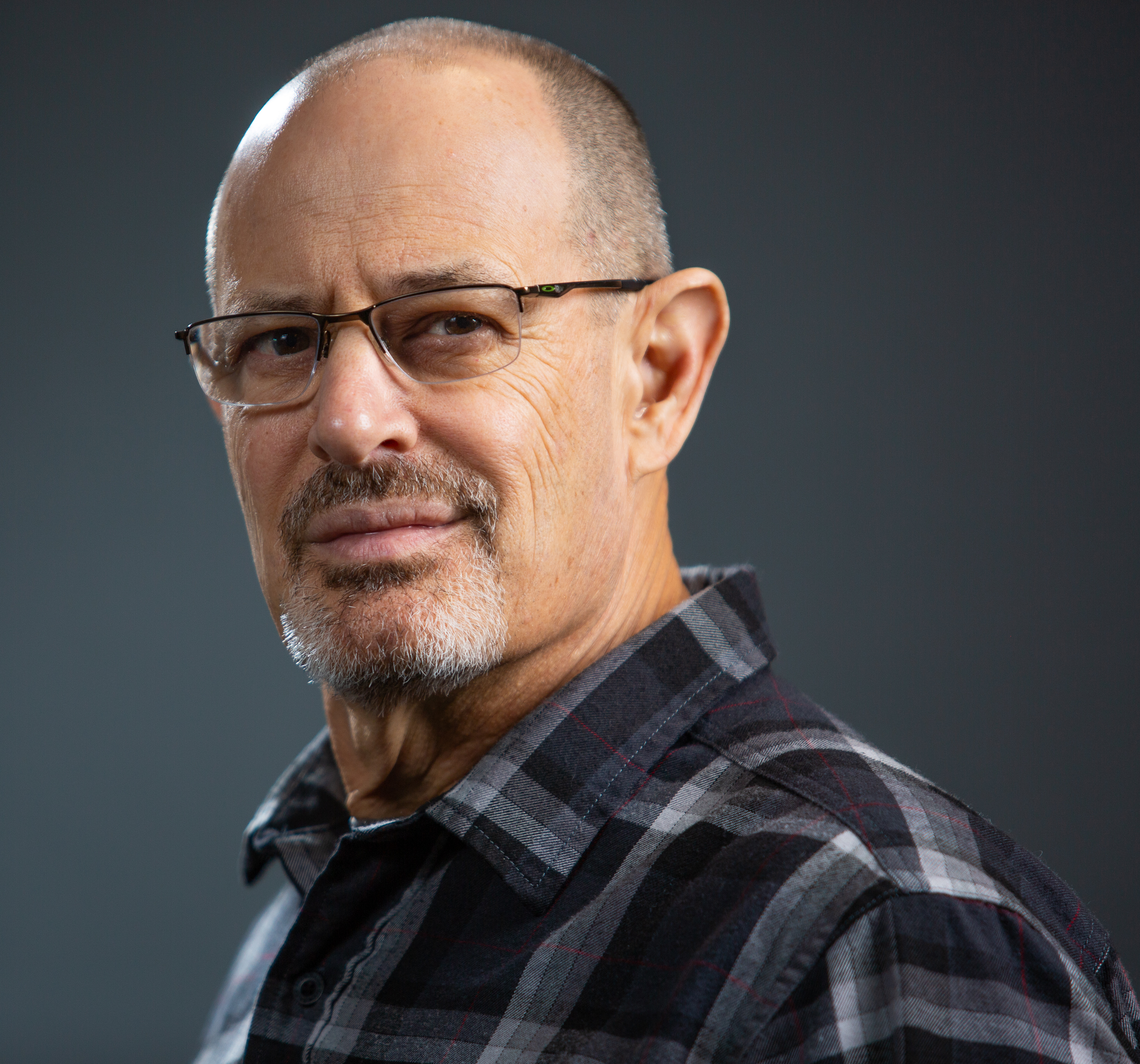
Steve is a long-time defensive weapons and instructor based out of Texas who has trained hundreds of men and women of all ages for more than two decades on how to better prepare to defend themselves and their loved ones. Steve has completed over 80 private-sector and law enforcement-only defensive weapons and tactics classes, and has trained civilian and law-enforcement officers in six states. Moses is a reserve deputy, former member of a multi-precinct Special Response Team, competitive shooter, and martial artist. Steve has written numerous articles for SWAT Magazine and other publications. Steve is a licensed Texas Level 4 Personal Security Officer and Instructor who was Shift Lead on a mega-church security detail for seven years, and has provided close protection for several former foreign Heads of State. He is currently an instructor at Relson Gracie Jiu Jitsu/Krav Maga in Tyler, Texas and Director of Training for Palisade Training Group (www.ptgtrainingllc.com).