Posted on February 20, 2026
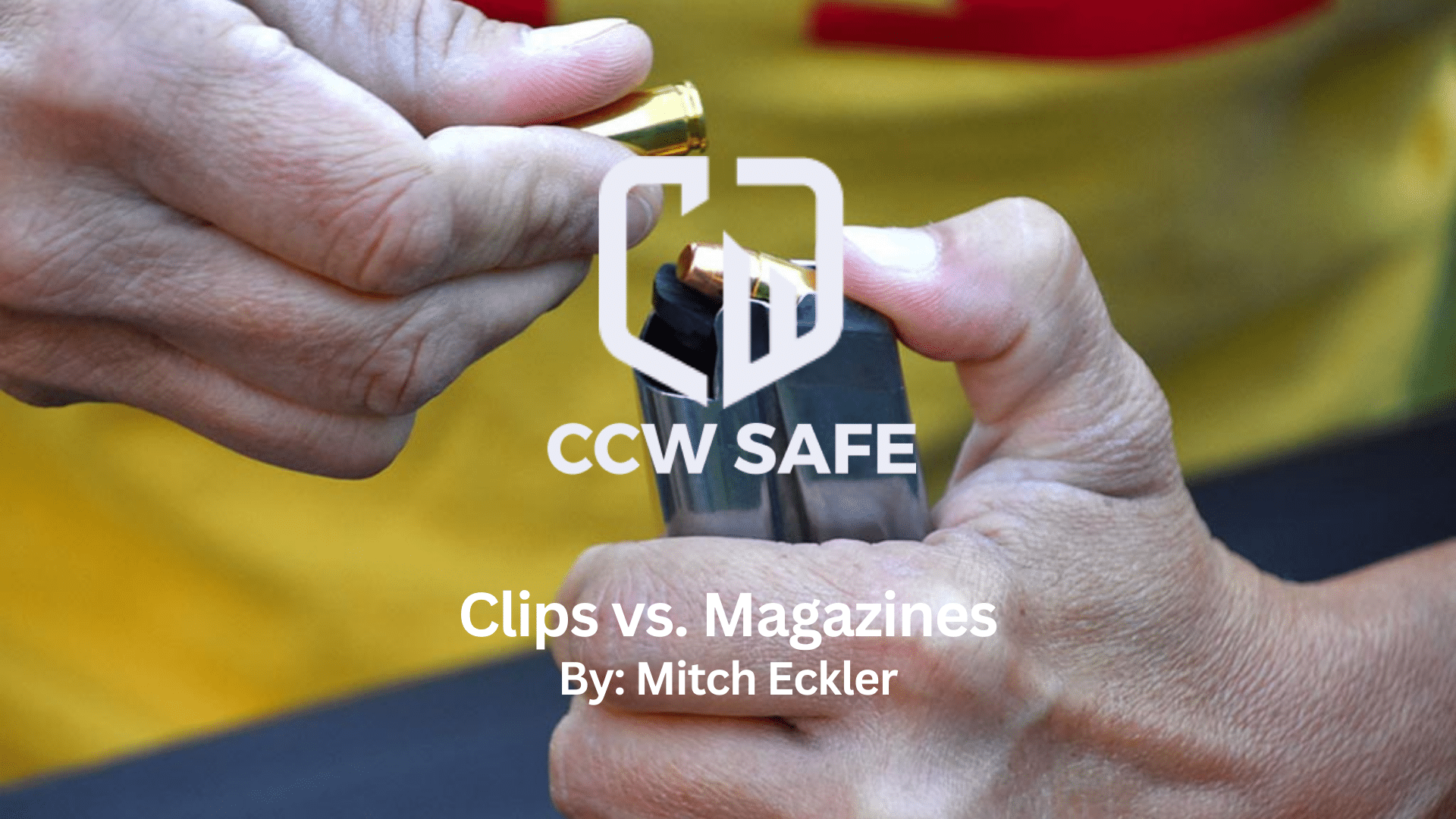
Clips vs. Magazines
By: Mitch Eckler
For many people just getting started in the shooting world, especially those carrying a firearm for their own or their family’s protection, the terminology can feel like a barrier to entry. Firearms have their own language, and like any technical space, that language exists for a reason. Words describe function, design, and intent. When those words are used incorrectly, conversations become confusing at best and misleading at worst.
Two of the most commonly misused terms in the firearms space are “clip” and “magazine.” They are often used interchangeably in movies, video games, and casual conversation, but they are not the same thing. Understanding the difference is not about sounding clever or correcting people for sport. It is about understanding how firearms actually work and communicating clearly with instructors, range staff, gunsmiths, and other shooters.
The Magazine
A magazine is both a storage device and a feeding device. It holds cartridges under spring tension and presents them to the firearm in a controlled manner so the gun can chamber and fire each round. In most modern pistols and rifles, the magazine is a detachable component that is inserted into the firearm and remains in place as the gun cycles.
When a cartridge is fired, the slide or bolt moves rearward. That movement allows the firearm to strip the next cartridge from the top of the magazine and guide it into the chamber. The magazine’s internal spring and follower push the next round upward, ensuring it is positioned correctly for feeding. When the magazine runs empty, it is removed and replaced with a loaded one so the cycle can continue.
This is why magazines are more mechanically complex than they appear. Feed lips, spring tension, follower geometry, and overall construction all affect reliability. In autoloading firearms, the magazine is an active part of the operating system. If a gun is not feeding properly, the magazine is often the first component examined because it plays such a critical role in the chain of fire.
What a Clip Actually Does
A clip serves a different purpose. A clip holds ammunition together so it can be transported and loaded into a firearm quickly. It does not generally feed ammunition into the chamber during firing. Instead, it acts as a temporary carrier that allows multiple cartridges to be transferred all at once.
One of the most common historical examples is the stripper clip. With this system, cartridges are held in a simple metal guide. The shooter positions the clip at the loading port of the firearm and presses the cartridges into an internal magazine. Once the ammunition is transferred, the clip is removed and either discarded or reused.
Another well-known example is the en-bloc clip used by the M1 Garand. In that design, the clip and cartridges are inserted into the rifle together, and the empty clip is automatically ejected once all rounds have been fired. While visually dramatic and iconic, it is still a distinct system from a detachable magazine.
Clip-based systems were popular in earlier eras for practical reasons. Clips were inexpensive, lightweight, and easy to manufacture. They allowed engineers to focus on the reliability of the action itself rather than building durable detachable magazines at scale. At the time, this was a sensible engineering tradeoff.
The Confusion
The confusion between clips and magazines is understandable. Both hold ammunition. Both are involved in loading a firearm. Popular media has blurred the distinction for decades, often using the word “clip” as a catch-all term. For someone new to firearms, there is little visual difference at a glance, especially when watching from a distance.
But function matters. Magazines stay in the firearm and actively feed ammunition during firing. Clips simply deliver ammunition to the gun and are then removed or ejected. That difference is the dividing line.
Getting the Terms Right
The first reason is effective communication. If you ask for a clip when you need a magazine, you will not get what you are asking for. In training environments, on the range, or in a gun shop, clear language saves time and avoids frustration.
The second reason is technical understanding. Reloading techniques, troubleshooting malfunctions, and selecting equipment all depend on knowing which component does what. Confusing a magazine with a clip can lead to incorrect assumptions about reliability or function.
There is also a legal and professional consideration, even if it remains surface level. If you are ever required to explain your equipment or actions, precision in language reflects competence and care. Sloppy terminology can create unnecessary confusion in situations where clarity matters.