Posted on July 2, 2026
Daniel Perry Case Brief
By: Shawn Vincent
On the night of July 25, 2020—the summer of nationwide protests following the police killing of George Floyd—U.S. Army sergeant Daniel Perry drove his car into a crowd of Black Lives Matter demonstrators in downtown Austin, Texas. Perry, stationed at Fort Hood, had driven roughly seventy miles south to work a shift as a rideshare driver. At about 9:51 p.m., turning from West 4th Street onto Congress Avenue, he found his vehicle surrounded by marchers. Garrett Foster, a 28-year-old Air Force veteran who was legally open-carrying an AK-47-style rifle and serving as caretaker to his quadruple-amputee fiancée, approached the driver’s window. Perry rolled it down, then fired five shots from a .357 revolver, striking Foster four times—three in the torso and once in the arm. Foster died at the scene.
Perry drove two blocks away and called 9-1-1. “I’m just an Uber driver,” he said. “I’ve never had to shoot someone before.” In a recorded interview that night, homicide detective David Fugitt asked him to re-enact the shooting; Perry said he believed Foster was about to aim the rifle at him—“I didn’t want to give him a chance to aim at me”—and that he had been distracted, texting a passenger and looking up to find himself in the crowd. Fugitt initially concluded the shooting was self-defense and did not recommend charges. But the physical record cut against Perry’s account: eyewitnesses said Foster never raised the rifle, the weapon was recovered with its safety on and no round chambered, and an Austin police analyst testified that Perry’s last text was sent two minutes before he reached the intersection. Perry did not testify at trial.
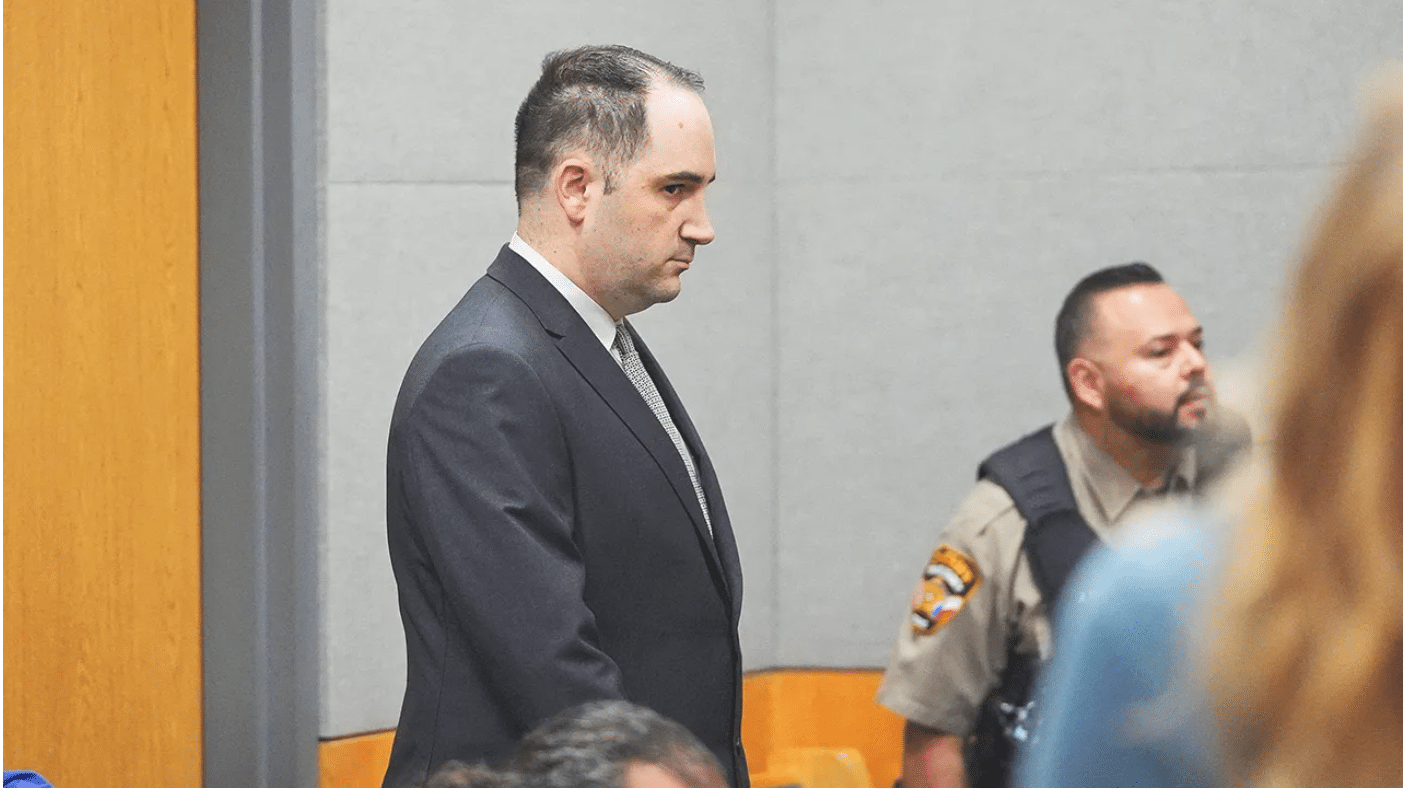
After a newly elected Travis County District Attorney, José Garza, took office, a grand jury indicted Perry for murder in July 2021. At his 2023 trial, the case turned less on the eleven seconds of the shooting than on what Perry had written long before it. Prosecutors introduced social-media posts and messages in which he wrote, “I might have to kill a few people on my way to work, they are rioting in front of my apartment complex,” and “I might go to Dallas to shoot looters,” and discussed shooting protesters “center of mass” because “it is a bigger target.” Don West, National Trial Counsel for CCW Safe, observed that Perry “may very well have wound up in this situation largely by accident, with no intent, but he doesn’t get the benefit of the doubt anymore from those 12 jurors once they hear his social media statements.” On April 7, 2023, the jury convicted Perry of murder and acquitted him of aggravated assault.
On May 10, 2023, Perry was sentenced to 25 years in prison. The verdict became a political flashpoint, and just over a year later, on May 16, 2024, Texas Governor Greg Abbott granted him a full pardon and restored his right to own firearms. (Additional racist and violent messages were unsealed after the verdict; the trial jury did not see most of them.) The pardon does not change the lessons the case offers an armed defender.
Lessons for Armed Defenders
Maintain Situational Awareness (Lesson #9)
Whatever the truth of Perry’s claim that he was texting and never saw the crowd, the failure is the same: a trained soldier drove a vehicle into roughly twenty people in the middle of a street. Either he was not observing the road well enough to register a mass of marchers—a profound lapse—or, as prosecutors argued, he saw them and drove in anyway. Situational awareness asks an armed person to perceive what is in front of them and adjust before acting. A crowd in a downtown intersection is precisely the kind of developing situation a defender should read early and steer away from, not into.
Avoid the fight (Lesson #36)
The entire encounter was avoidable. Perry had driven seventy miles into a city where, by his own online account, he expected to meet protesters. Prosecutors argued he ran a red light and inserted himself into the march looking for a “target of opportunity.” Even setting that theory aside, a driver who finds a protest in the road can stop, turn, or back away; nothing compelled Perry to press forward into the crowd. The most reliable way to survive a deadly confrontation—legally and physically—is to never be in one. Driving toward a volatile gathering is the opposite of avoiding the fight.
The belief of imminent harm or death must be reasonable (Lesson #5)
Perry told police that Foster raised his rifle and that he fired to keep from being shot. For a self-defense claim to hold, a jury must find that the belief is objectively reasonable. Here, the evidence worked against him: multiple eyewitnesses testified that Foster never pointed the weapon, and Perry took the time to roll down his window before firing. When the physical evidence contradicts the defender’s account of the threat, it undermines the self-defense claim.
Don’t give in-depth statements to police (Lesson #31)
Perry submitted to a lengthy recorded interview the night of the shooting, without an attorney, and even acted out the encounter for detectives. He believed he was explaining a justified shooting. Instead, his statements became the prosecution’s material: his claim that Foster was about to aim the rifle was contradicted by eyewitnesses and the weapon’s condition, and his claim that he had been distracted by texting was contradicted by his own phone records. A defender who narrates the event in detail before the evidence is in hands prosecutors a fixed account that the physical facts can later be measured against—and found wanting.
Don’t say foolish things (Lesson #33)
This is the lesson that decided the case. The shooting itself was, in isolation, a close and arguable self-defense scenario—an armed man approaching a stopped car. What removed Perry’s benefit of the doubt was a trail of his own words: messages about killing protesters, shooting looters in Dallas, and aiming “center of mass.” Prosecutors used them to supply the intent and animus that the eleven-second encounter alone could not establish. As Don West put it, once jurors hear statements like that, the defender no longer gets the benefit of the doubt. A defender’s old posts can reach forward in time and convert a defensible shooting into a murder conviction.