Posted on June 18, 2026
House of Worship Security Team and Risky Shots
By: Steve Moses
I am not an advocate of taking risky shots anywhere, and that is never so true than when inside of a House of Worship. Many security team members are unaware that a 9mm handgun bullet fired on a horizontal plane can travel over 100 yards before it hits the ground and even then skip a considerable distance on a hard surface with enough velocity to injure or kill. During a service there will always be attendees within bullet-striking distance. Sheetrock walls are easily penetrated by handgun bullets. Successful self or third-party defense will always favor the team member who is aware of what is taking place in and around the shooter/killer and the ability to select and then move to a better position in order to lessen the possibility of other persons in close proximity of being struck by errant rounds. This may involve getting closer to the shooter in some instances.
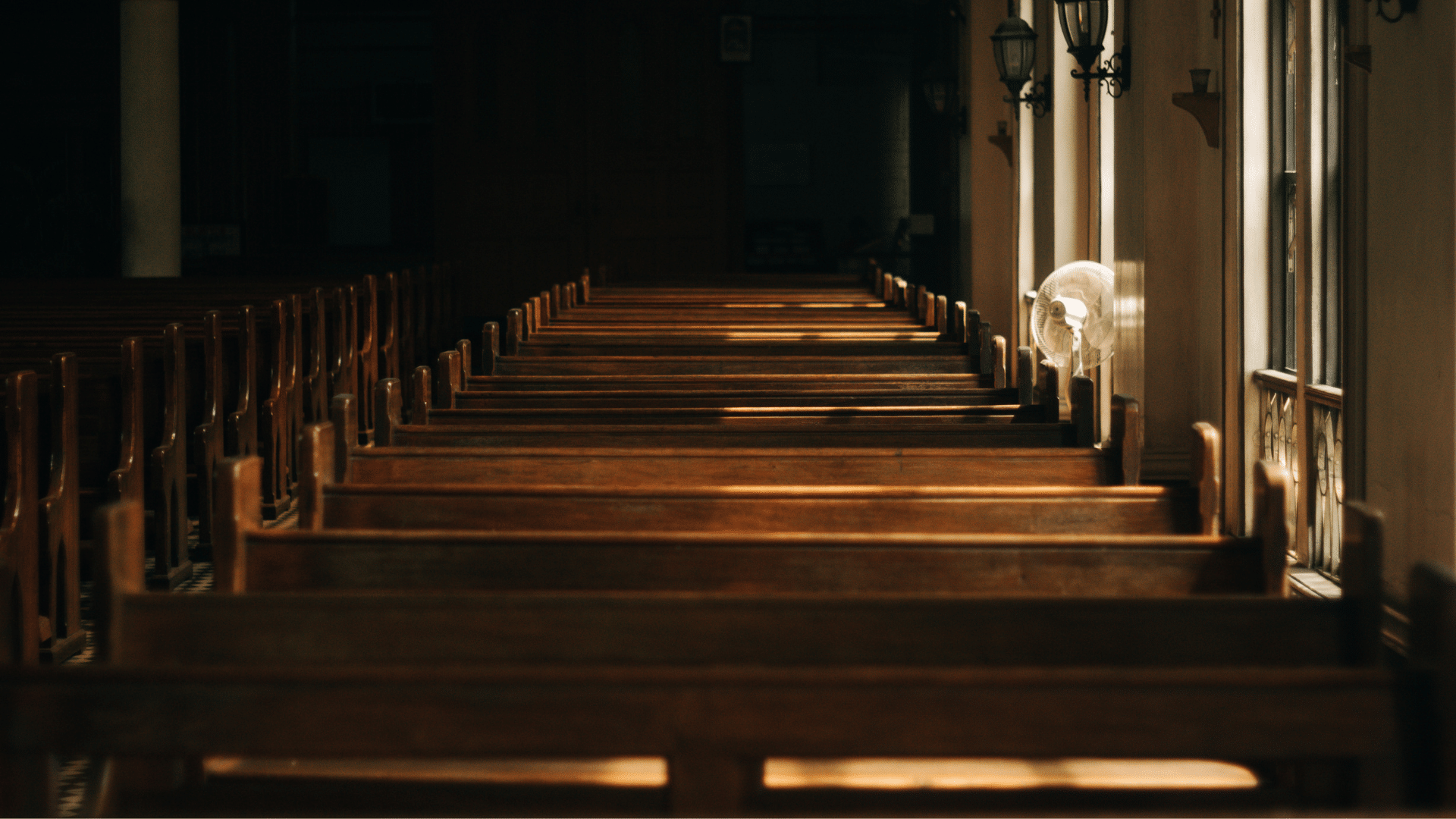
There is a high probability during gunfire that some panicked parishioners will leap up from the pews and start moving in different directions. This may occur at the same moment a team member has achieved a good sight picture and is completing the press of the trigger. Team members should be trained to look for attendees in front of, on either side, and behind the shooter. There is not only the possibility that an attendee may cross in front of or behind an attacker but that the attacker may move behind or in front of attendee. This can be a real challenge for team members using iron-sighted pistols. Proper shooting technique calls for a hard focus on the front sight of the handgun which may make it harder to see what is happening around the shooter. Advocates of red dot sights on pistols may find that their vision is less constricted since their focus is placed on the target instead. As always, there is no free lunch. Team members relatively new to optic-sighted handguns often have difficulty keeping the dot in the window of the optic when shooting rapidly. I highly recommend that team members that are new to optic-sighted handgun not only seek training from qualified instructors but consider shooting action pistol competitions like USPSA, Steel Challenge, and IDPA matches.
Some team members believe that all they need to do is not miss without taking into consideration that both parties in a gunfight are likely going to do everything that they can to not get hit. The shooter may suddenly move, which results in the team member placing a round right where the attacker was as opposed to where the attacker is. Another thing to take into consideration is the defender’s reaction time. Many firearm instructors place high importance on shooting extremely fast splits (the time that elapses between the firing of one shot and the subsequent firing of another shot). Master instructor Tom Givens urges his students to “not outrun their headlights” by shooting faster in a lethal force encounter than they can perceive and respond to a change of circumstances that may call for shooting at a more deliberate speed in order to make better hits, continuously adjusting their point of aim because the shooter is moving, or immediately stop shooting when the shooter no longer represents a deadly threat. The speed at which a person who is shot can collapse may come as a surprise to the team member who was unable to react quickly enough before firing another round into the void where the attacker was a micro-second before.
There will be times when the shooter is the only backstop available because of the attendees behind him or her. Overpenetration then becomes a real concern. This may occur as a results of hits on peripheral parts of the body which offer little resistance to even a low-velocity bullet, the use of ball ammunition which does not expand, or even hollow-point ammunition that fails to expand and slow down because the tip becomes clogged with clothing. Possible solutions to the problems of overpenetration include the following:
- Shoot accurately even if the team member has to get closer to the shooter than he or she feels safe. This is just one more of the reasons that I urge team members to wear body armor.
- Study tactical anatomy and learn the critical zones of neutralization regardless of the shooter’s angle or elevation relative to the team member. One of the best ways to get good at this is to attend the Tactical Anatomy Summit (www.tacticalanatomysummit.com).
- Use proven ammunition that has a long track record of success. Two very good choices are Speer Gold Dot and Federal HST. Hornaday Critical Duty +P ammunition is also a good choice. I have seen the non +P version fail to expand when shot into cloth-covered ballistic gelatin from short-barreled handguns. Well-respected national firearms trainer Chuck Haggard advocates the use of High Desert 9mm 115-grain jacketed hollow-point ammunition in short-barreled handguns, and that is what I am carrying right now in my Smith-Wesson M&P 2.0 9mm pistol with a 3.6” barrel.
- Carry enough gun! Many church security team members use the same micro-compact handguns that they use for everyday concealed carry. These handguns are significantly more difficult to shoot well than larger compact and full-sized handguns, and third-party defense in a crowded environment is challenging enough without relying on a handgun that may weigh less than one pound that has a five-pound trigger.
The objective of this article is not to dissuade CCW Safe members from joining church security teams. I think all Houses of Worship should have teams in place even if that team has only one member. The objective is to inform CCW Safe members that there are inherent risks that they may not have been fully aware of associated with being on such a team. Persons that are risk averse or know that they may lack the necessary handgun skills should ask themselves if it is not only in their best interest but the best interest of other worshippers for them to not be a part of a team. As for the rest, having a mental map of what the terrain may look like when dealing with a deadly threat on church grounds and training for it in advance may be the critical difference between a negative outcome and a positive outcome.
My late father had a sign in his kitchen that said “Pray to the Lord but row for shore.” I took this to mean that the surest path to success includes us putting the work in, and when it comes to church security much of that work includes training.
This article is written for educational purposes only and does not constitute professional advice, nor does my opinion necessarily reflect that of CCW Safe.
Steve Moses was a team leader/shift lead on a megachurch church security team for eight years. Steve has been a defensive firearms and tactics instructor for over thirty years and provides customer support and content for the Firearms Trainers Association and content for CCW Safe. Moses is certified as a Tactical Anatomy Shooting with X-Ray Vision Instructor, Rangemaster-certified Master Firearms Instructor and Defensive Shotgun Instructor, and former Texas Department of Public Safety Level Four Personal Protection Officer Instructor. He also holds instructor certifications in Red Dot Pistol Fundamentals, Empty Hand Knife Defense, OC/Less Lethal, Small Impact Weapons, Active Shooter Response, Force-on-Force, and other disciplines. He is a retired Deputy Constable, former member on a multi-precinct Special Response Team, and founder of the Tactical Anatomy Summit. Steve is also a Tae Kwon Do black belt and holds brown belts in both Japanese and Brazilian Jiu Jitsu.