Posted on August 28, 2026
Markus Kaarma Case Brief
By: Shawn Vincent
Markus Kaarma, a homeowner in Missoula, Montana, shot and killed an intruder in his garage shortly after midnight on April 27, 2014. Ten days earlier, Kaarma and his partner, Janelle Pflager, had been burglarized. The couple often left their garage door partly open for ventilation while they smoked there, so no force was required; someone walked in and took a wallet, credit cards, and an iPhone. A neighbor who had worked in law enforcement told Pflager it looked like a “crime of opportunity” and suggested they lock up and keep the garage shut.
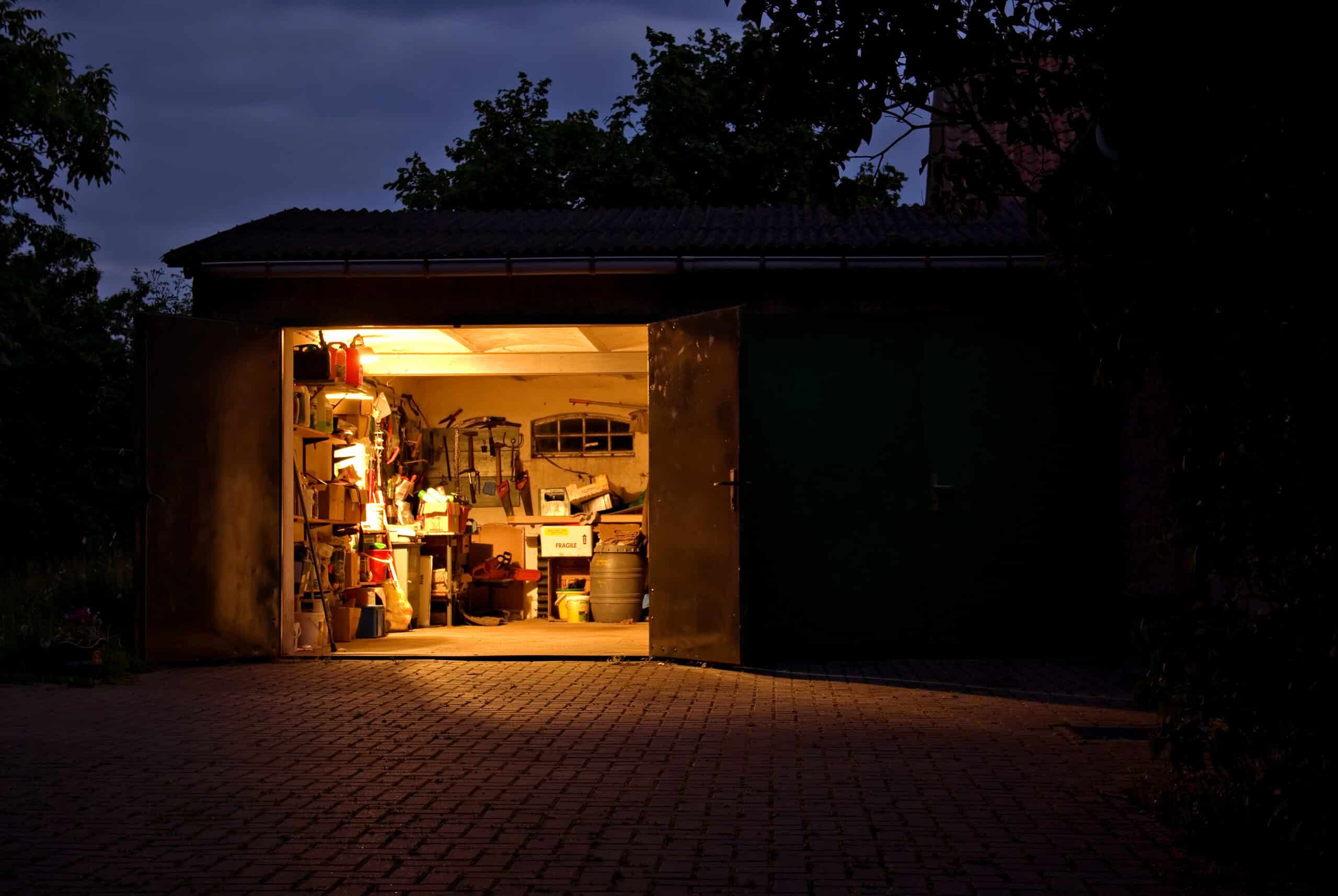
They did the opposite. Pflager called the stolen iPhone and the thief answered. Court documents record that she then placed a purse in the garage “so they would take it,” left the overhead door open five and a half feet, put a video baby monitor inside, and installed motion sensors outside. The Montana Supreme Court’s opinion records the reason in her own words: “Witnesses testified that Pflager knew the burglars would come back because ‘we are going to bait them,’ and that their guns were loaded.” In his own interview with police, Kaarma said the door had been left open to “entice the suspects” and that it had not been his idea.
Kaarma told people what he intended to do about it. On April 23 — six days after the burglary and four days before the shooting — he told stylists at a Great Clips that he had not slept in three nights because he had been “waiting up to shoot some (expletive) kids.” One stylist testified he said police were “baiting him into killing these kids,” and that he was “going to kill them and take care of it.” As the appointment ended, according to the charging affidavit, he said: “And I’m not (expletive) kidding, you’ll see this on the (expletive) news… I’m going to (expletive) kill ’em.” Two other stylists heard some or all of it; one said she stopped listening when Kaarma said he would shoot police officers as well.
Just after midnight on April 27, the baby monitor showed a figure in the garage. Kaarma took a pump-action shotgun he kept by the door, walked out the front of the house, positioned himself between his pickup and the partly open garage door, and fired four rounds into the darkness in a sweeping motion. Two of the four struck the intruder, in the left arm and in the head. Kaarma later told police he never saw the person before he fired.
The intruder was Diren Dede, a seventeen-year-old German foreign exchange student who had learned about “garage hopping” from his American friends and was, by the account of the friend waiting in the street, looking for alcohol. He was unarmed, and he had never been in Kaarma’s garage before. The two teenagers who committed the April 17 burglary, Tristan Staber and Mykel Martin, were identified and testified at trial; one of them told the court, “I was the previous break-in, and I was the only reason [Kaarma] was waiting for another person to come in.”
Both Kaarma and Pflager gave detailed statements to police. On the night of the shooting, Pflager told an officer that Dede had cried out “No, no, no. Wait. Please,” a recording prosecutors played at trial; on the stand seven months later, she testified she had not heard him plead at all. Kaarma told investigators he heard a “metal on metal” sound, thought he was going to die, and described the intruder as behaving like a “caged animal.” While in jail, he spoke to Pflager on a recorded line and said the neighborhood should be grateful. A neighbor, Jessica Bracey, who had heard the couple’s rants, told her husband after the gunshots: “They baited them in there.”
Kaarma was charged with deliberate homicide, Montana’s most serious homicide offense. After an eight-day trial and roughly eight hours of deliberation, a jury convicted him in December 2014. Judge Ed McLean sentenced him to 70 years. Pflager was never charged, though the Dede family’s civil suit named her alongside Kaarma before it was resolved in an undisclosed settlement.
Lessons for Armed Defenders
Don’t provoke a potential aggressor (Lesson #11)
Kaarma sits at the far end of the provocation spectrum, where the invitation is not a taunt or a gesture but a physical construction. The open door, the planted purse, the camera, and the loaded shotgun by the front door were assembled to entice an intruder, and the couple told people so in advance. Kaarma and Pflager literally set a trap, and it’s one of the most clear-cut-cases of provocation that weve explored.
Understand the legal consequences (Lesson #3)
Kaarma appears to have believed the Castle Doctrine gave him broad authority to use deadly force against anyone inside his property line. Montana’s statute protects a resident who reasonably believes force is necessary to prevent an assault or a forcible felony, but it absolutely does not give the defender broad discretion to shoot just anyone trespassing on their property. Kaarma and Pflager probably never considered they could face a civil lawsuit—even if they thought they were justified withing the criminal justice system.
The threat must be imminent and serious (Lesson #4)
Kaarma did not know who was in his garage and could not see well enough to judge whether they posed any threat at all. He fired four times into a dark space at an unarmed teenager. The “caged animal” and sound of “dragging metal” likely sounded to a jury like justification after-the-fact to make the shooting appear more justified.
Don’t leave a place of safety to confront a threat (Lesson #14)
Kaarma, Pflager, and their infant were behind locked interior doors with a live video feed of the garage and a phone in hand. Kaarma could have locked down, moved his family into a more secure room, called 9-1-1, and waited to see whether anyone tried to enter the living space. He chose instead to walk outside and take up a firing position facing his own garage.
Don’t say foolish things (Lesson #33)
The three Great Clips stylists were the spine of the prosecution’s case. Kaarma announced his intent, in public, to strangers, four days before he carried it out, and one of them was frightened enough to remember every word. He added to the record from jail on a monitored line. A defender who narrates his intentions in advance provides a window to his mindset during the moment he pulled the trigger.
Don’t give in-depth statements to police (Lesson #31)
Both Kaarma and Pflager talked at length without counsel, and both said things that damaged him. Pflager’s account of Dede pleading was recorded on the night of the shooting; her attempt to walk it back at trial gave prosecutors a credibility problem to exploit rather than a correction to accept.