Posted on November 17, 2025
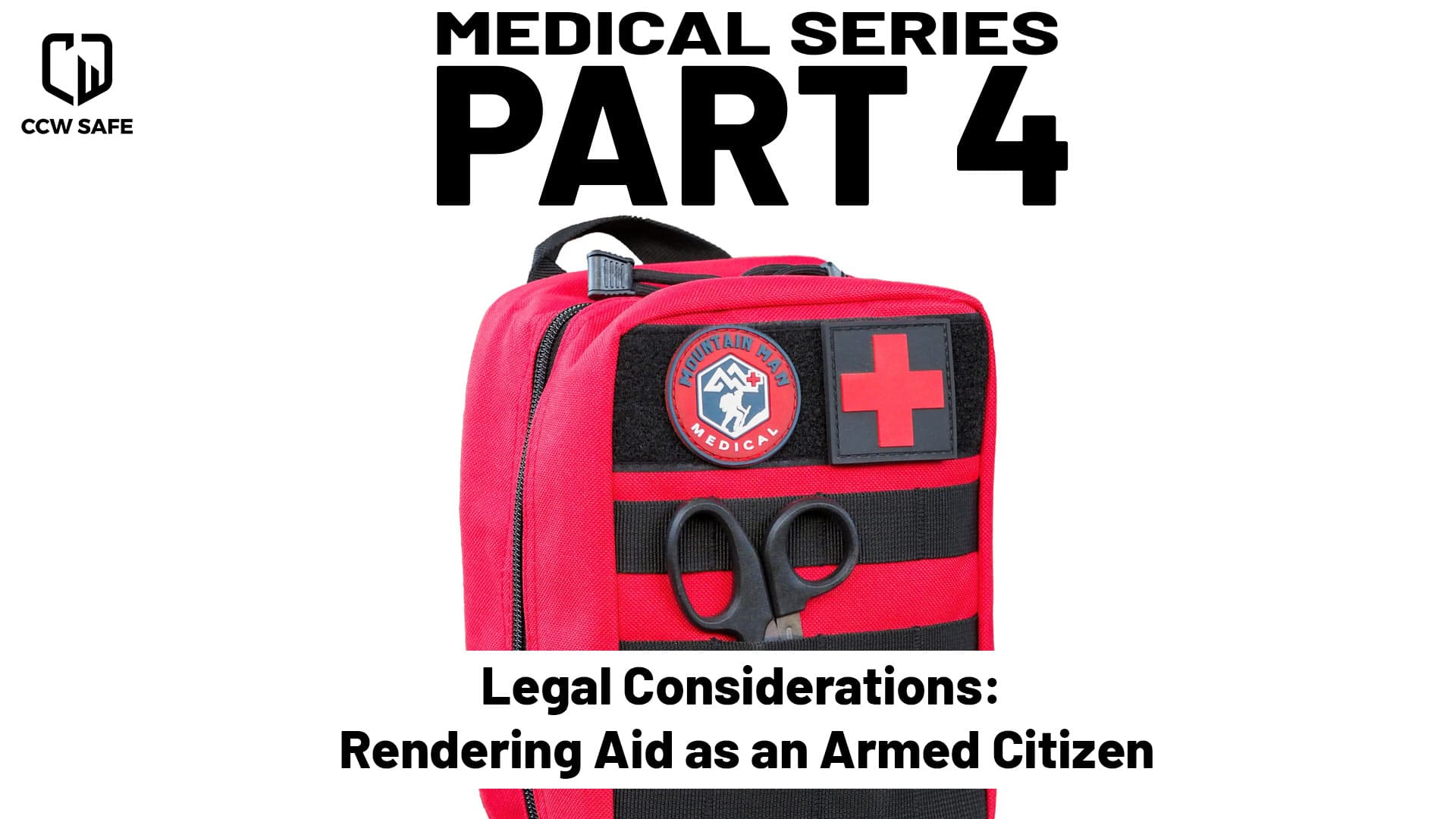
Medical Series Pt. 4 – Legal Considerations: Rendering Aid as an Armed Citizen
By: Jacob Paulsen from ConcealedCarry.com
Legal Considerations: Rendering Aid as an Armed Citizen
Understanding your protections and obligations when providing emergency medical assistance
Editor’s Note: This is the final article in a 4-part series on medical preparedness for armed citizens. We’ve covered why medical training matters, essential trauma skills, and equipment selection. Now we’ll explore the legal framework that protects you when providing emergency medical aid.
You’ve learned why medical skills matter statistically, been introduced to essential trauma techniques, and built your equipment capability. Now it’s time to complete your preparedness foundation with crucial legal knowledge that protects both you and those you’re trying to help.
Important Note: This article is intended for armed citizens who are not licensed medical professionals. If you are a physician, nurse, EMT, or other licensed medical provider, additional legal parameters and professional obligations may apply that vary by state and are beyond the scope of this article.
The Foundation: You Have No Legal Duty to Act
Before diving into legal protections, it’s crucial to understand this fundamental principle: As a private citizen without medical licensing, you have no legal duty to provide medical assistance to anyone. Your decision to help is entirely voluntary.
This means you cannot be sued or prosecuted for choosing not to provide medical aid, even if you have the training and equipment to help. The law recognizes that requiring untrained individuals to provide medical assistance could create more harm than good.
However, a few states (Rhode Island, Minnesota, Vermont) have limited “Duty-to-Act” laws that may require you to call for professional help or provide reasonable assistance if you can do so safely. Even in these states, the duty is typically minimal and doesn’t require you to provide hands-on medical care.
The voluntary nature of civilian medical assistance is actually a cornerstone of Good Samaritan legal protections.
Good Samaritan Laws: Your Legal Shield
All 50 states and the District of Columbia have Good Samaritan laws designed to encourage people to help others in medical emergencies by providing legal protection from liability. While the specific language varies between jurisdictions, these laws share common principles that protect well-intentioned helpers.
Good Samaritan laws do not make you immune from being named in a lawsuit. However, they provide strong legal defenses that typically result in cases being dismissed when you’ve acted within their protection.
The Six Essential Requirements
For Good Samaritan legal protection to apply, your actions must meet six critical requirements. Miss any one of these, and you may lose your legal protection:
1. The Situation Must Be an Emergency
Good Samaritan laws only apply during genuine medical emergencies where immediate intervention is necessary to prevent death or serious injury. A car accident with serious injuries qualifies. Helping someone with a headache does not.
Practical Application: The trauma situations we’ve discussed throughout this series—severe bleeding, chest injuries, unconscious patients—clearly meet the emergency threshold. If you’re unsure whether a situation qualifies as an emergency, err on the side of caution and call 911.
2. Your Services Must Be Voluntary
You cannot be compelled, hired, or contractually obligated to provide the care. Your assistance must be a voluntary decision to help someone in need.
Practical Application: This is automatically satisfied for armed citizens providing spontaneous assistance at accident scenes or other emergency situations. You chose to help, no one forced you.
3. The Victim Must Accept Your Care
You cannot force medical treatment on someone who is conscious and refusing assistance. Consent is required whenever possible.
Practical Application:
- Conscious patients: Always ask permission before providing care. “I have medical training, may I help you?”
- Unconscious patients: The law assumes “implied consent” for life-saving care when someone cannot give consent due to their condition.
- Verbal consent is sufficient in emergency situations—you don’t need written permission.
4. Care Must Be Provided Free of Charge
You cannot accept payment for emergency medical assistance and maintain Good Samaritan protection.
Practical Application: This is straightforward for civilian emergency response. Never accept money, gifts, or other compensation for providing emergency medical aid.
5. Care Must Be Provided “In Good Faith”
Your intention must be genuinely to help the victim, not to harm them or serve some other purpose.
Practical Application: This requirement is easily met when you’re genuinely trying to save someone’s life or prevent serious injury using the techniques we’ve covered in this series.
6. Care Cannot Involve Gross Negligence or Willful Misconduct
This is the most complex requirement and deserves detailed explanation.
Ordinary Negligence vs. Gross Negligence:
- Ordinary Negligence: You made a mistake that a reasonable person with similar training might make under similar circumstances. Good Samaritan laws typically protect against ordinary negligence.
- Gross Negligence: You acted in a way that was “willful, wanton, or malicious,” or grossly departed from accepted standards of care. Good Samaritan laws do not protect against gross negligence.
Practical Application: Using the trauma techniques taught by organizations like Mountain Man Medical, applying tourniquets and hemostatic gauze as trained, and staying within your skill level will keep you well within ordinary negligence protection. Attempting procedures you’ve never learned or acting recklessly could constitute gross negligence.
Scope of Practice: Staying Within Your Lane
As an armed citizen without medical licensing, your “scope of practice” is limited to basic life-saving interventions that don’t require professional medical training. The trauma skills we’ve covered in this series—bleeding control, basic airway management, and wound care—fall clearly within this scope.
Stay Within Your Training: Only perform interventions you’ve been trained to do. Don’t attempt advanced medical procedures you’ve seen on TV or read about online.
Know Your Limits: When professional medical help arrives, step back and let them take over. Your role is to sustain life until professionals can provide definitive care.
Equipment Appropriateness: Using properly designed medical equipment (like the tourniquets and trauma supplies from Mountain Man Medical) for their intended purposes supports your scope of practice. Improvised tools or inappropriate equipment use could be seen as outside reasonable care standards.
Documentation and Evidence
While Good Samaritan laws don’t require documentation, keeping basic records protects you legally and helps medical professionals who take over care.
What to Document:
Time: When you started providing care and when you transferred care to professionals Condition Found: What you observed when you arrived (consciousness, breathing, bleeding, etc.) Interventions: What you did (tourniquet applied, wound packed, etc.) Response: How the patient responded to your interventions Transfer: When and to whom you transferred care
How to Document:
Mental Notes: In chaotic situations, make mental notes of key information Written Record: If possible, write down key details after the situation stabilizes Photos: If appropriate and safe, photos can document conditions and your interventions Witnesses: Note who else was present and witnessed your actions
The mini marker included in trauma kits like Mountain Man Medical’s Yellowstone serves this documentation purpose—marking tourniquet times and patient information.
Interacting with Emergency Responders
When emergency responders arrive at a medical emergency scene, they may not immediately understand your role or actions. Proper interaction protects both you and those responding.
Key Principles:
Identify Yourself: Clearly state your role: “I’m a private citizen who provided first aid”
Explain Your Actions: Briefly describe what you did and why: “I applied a tourniquet to stop severe bleeding”
Show Your Equipment: Demonstrate that you used proper medical equipment, not improvised tools
Provide Documentation: Share any notes or observations you’ve made
Stay Available: Don’t leave the scene until you’ve spoken with investigators if they need you
If You’re Armed:
Inform Officers: Let law enforcement know you’re armed if the situation allows safe disclosure Follow Instructions: Comply immediately with any weapons-related directions Explain the Situation: Make clear you were providing medical assistance, not involved in violence Legal Consistency: Your actions should show a pattern of trying to preserve life, not harm it
Should You Render Aid to an Attacker?
This question presents one of the most complex scenarios an armed citizen might face: whether to provide medical assistance to someone you’ve just shot in self-defense. While there are tactical considerations beyond the scope of this article, the legal implications deserve careful examination.
Safety Must Always Come First
Never render aid to anyone, especially someone who was attempting to harm you, unless you have 100% confidence in your own safety. No benefit is worth risking your life or creating an opportunity for continued attack.
Factors affecting your safety assessment include:
- Whether the threat is truly neutralized
- Whether other threats might be present
- Your ability to maintain situational awareness while providing care
- The stability of the overall situation
Until law enforcement secures the scene, your primary obligation is to your own safety and that of other innocent parties.
Potential Legal Implications
From a legal narrative perspective, your actions after a defensive shooting may influence how your overall conduct is perceived, should you later face criminal charges or civil litigation.
Potential Benefits of Rendering Aid: Providing medical assistance to someone you’ve shot, when it can be done safely, may support the narrative that your intention was never to take life but only to stop the threat and preserve life whenever possible. This demonstrates a consistent commitment to life preservation that aligns with justified self-defense.
Potential Risks of Not Rendering Aid: Choosing not to provide medical assistance, despite having the skills and equipment to do so, could potentially be used to suggest callousness or intent to kill rather than stop a threat. However, this concern should be easily addressable in court by explaining legitimate safety concerns and the reasonable decision-making process that led to prioritizing your continued safety.
Legal Reality Check
Important: These are potential considerations, not legal guarantees. Every self-defense situation is unique, and many factors beyond post-shooting medical aid affect legal outcomes. Your primary legal protection comes from the justification of your initial use of force, not your subsequent actions.
No Legal Requirement: There is no legal requirement for armed citizens to provide medical aid to anyone, including someone they’ve shot in legitimate self-defense. Your decision is entirely discretionary based on safety and circumstances.
In short, it is highly unlikely that any potential benefits of rendering aid to your attacker would outweigh the additional dangers you face by doing so, but the reader can make their own situational-dependent decision.
Practical Recommendations
Prioritize Scene Safety: Focus on securing the scene, calling 911, and ensuring no additional threats exist before considering medical intervention.
Know Your Limits: If you do choose to render aid, stay within your training and capabilities. Don’t attempt interventions beyond your skill level.
Legal Consultation: Given the complexity of these situations, CCW Safe members should immediately contact the CCW Safe critical response team following any defensive incident. CCW Safe’s expert legal guidance and support through the critical first hours and beyond is invaluable in navigating the legal complexities that follow a defensive shooting, including decisions about medical aid and interaction with law enforcement.
Building Confidence Through Knowledge
Understanding your legal protections shouldn’t make you cavalier about providing medical assistance—it should give you confidence to help when lives are at stake. The legal framework exists specifically to encourage people like you to act when someone’s life hangs in the balance.
The trauma skills and equipment we’ve covered in this series, when used within your training and the Good Samaritan framework, provide both legal protection and the capability to save lives. You’re not playing doctor—you’re providing basic life support using proven techniques until professionals can take over.
Completing Your Preparedness Foundation
This series has built your complete medical preparedness foundation:
Article 1: Established why medical skills matter more statistically than defensive shooting skills
Article 2: Taught you essential trauma techniques that address the leading causes of preventable death
Article 3: Equipped you with genuine, quality medical gear that transforms knowledge into capability
Article 4: Provided legal knowledge that protects you when helping others
You now have the mindset, skills, equipment, and legal understanding to make a difference in medical emergencies. The question isn’t whether you’ll encounter situations where these capabilities matter—statistics say you will. The question is whether you’ll be prepared to act.
Your commitment to protecting life shouldn’t end with your ability to stop threats. It should extend to your ability to preserve life in all the emergency situations you’re likely to encounter. You now have the foundation to do both.
Remaining parts to this series: