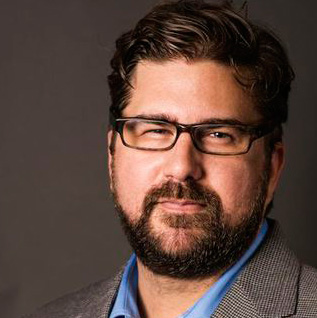

Most self-defense shootings unfold in a matter of moments. Self-defense trials, on the other hand, stretch on for days and sometimes weeks. At the end of a trial, the jury must decide whether the defender acted with a reasonable belief that they faced the imminent threat of great bodily harm or death. Criminal defense attorney Don West says, “That analysis is done after the fact by people in a sterile environment with all the time in the world to assess the reasonableness of the defender’s conduct, which probably took place in a second and a half.”
From the sterile environment of the deliberation room, the jury will apply a two-pronged analysis, assessing the defender’s actions from both an objective and subjective point of view. Objectively, Don says, “Reasonable belief means a belief that would be held by an ordinary and prudent person in the same circumstances as the actor.” Subjectively, the jury must feel the defender honestly believed they faced a significant threat, based on an assessment of the defender’s own specific personal knowledge, experience, and abilities.
Because jurors aren’t telepathic, Don says they “have to look at external things to decide what was going on in the defender’s mind.” It’s not just what happened the moment the defender pulled the trigger. Don says, “What happens before and afterwards becomes part of the overall totality of the circumstances.” That means jurors will judge the defender’s use of deadly force not just on the moment the trigger was pulled, but on an entire sequence of actions surrounding the shooting.
In Lesson 4, we reinforced the legal standard that an attacker must present an imminent and severe threat before a defender may resort to deadly force. In tactical terms, it means the attacker must have the ability, opportunity, and intent to cause great bodily harm or death. When there is controversy regarding any one of those elements, we refer to the problem as The Armed Defender’s Dilemma. When we add the concept of reasonableness to this conversation, it creates the possibility that a defender can be factually wrong about a threat—just as long as their error is both objectively and subjectively reasonable to a jury.
A defender’s error formed the center of controversy in the Amber Guyger case, which we explored in Lesson 1. You’ll recall that Guyger, an off-duty Dallas police officer, came home from a long double-shift and accidentally parked on the wrong floor of her apartment building, where she mistakenly entered the wrong unit, which she thought was hers—even though she found the door unlocked and suspected there was an intruder. When she encountered the occupant inside, he moved towards her. She yelled for him to stop, and when he didn’t, she fatally shot him. “I was scared whoever was inside of my apartment was going to kill me,” Guyger testified at trial.
In ordinary circumstances, there is no justification for barging into someone’s home and shooting them in their living room. Conversely, in most cases, if someone walked into their own home and encountered an aggressive intruder, then the Castle Doctrine provides significant legal presumptions for a defender who uses deadly force. The verdict in Guyger’s case pivoted on the question of whether she reasonably believed she was in her apartment when she shot the occupant—not whether she was actually in her apartment.
Ultimately, a jury convicted Guyger of murder, in part because of her ill-advised decision to enter the apartment even after she suspected an intruder. Guyger’s mistake of entering the wrong apartment, compounded by her bad judgment, led the jury to find her use of force unreasonable given the totality of the circumstances. When it came to sentencing, however, the same jury imposed a surprisingly light prison term—only 10 years—perhaps indicating that Guyger’s compound errors were understandable, even if not reasonable under the law.
Guyger told jurors she was “scared” of the person in the apartment. Fear often factors into the assessment of self-defense cases. In many states, use-of-force statutes reference the concepts of both reasonable belief and reasonable fear in different contexts. Don says, “I prefer the term reasonable belief. A prosecutor could exploit the idea of reasonable fear with an argument that the defender acted out of panic, and their decision was not grounded in rational, articulable reasons.”
In each of the self-defense cases we explored in Lesson 4, the defenders had reason to be afraid. 71-year-old Curtis Reeves faced the unexpected wrath of a younger man who towered over him. Gregory Farr, with his foot in a cast, woke late at night to the sound of a man trying to break through his front door. Daniel Perry came face-to-face with a rifle-wielding protester on the streets of Austin, Texas. In Lesson 5, we’ll revisit these cases—not to see if the defenders had reason to fear the aggressors—but rather to explore whether the defender’s belief that they faced an imminent threat of great bodily harm or death was ultimately reasonable given the totality of the circumstances.
***
The so-called Movie Popcorn Murder made headlines in 2014 because, on the surface, the reason for the shooting seemed outrageous. A man named Curtis Reeves took his wife to see a matinee screening of the film Lone Survivor. During the previews, Reeves asked the man sitting in front of him, Chad Oulson, to put his phone away. Oulson responded with a string of profanities, and he smacked Reeves’ bucket of popcorn, sending pieces flying. In response, Reeves drew his pistol and fired a single fatal shot into Oulson’s chest. Prosecutors charged Reeves with murder. For many in the press and the public, Reeves’ self-defense claim sounded absurd—an angry overreaction to a mild offense.
At trial, we learned there was more to the story. Luckily for Reeves, jurors wouldn’t be judging the defender exclusively on the moment he pulled the trigger because they’d be considering the totality of the circumstances. Moreover, jurors would be judging Reeves not just from an objective “ordinary and prudent man” standard, but also with subjective consideration for Reeves’ age and health, and with an understanding of his past experience as a police captain and the head of security for a large amusement park.
Reeves’ lawyers presented testimony from an expert witness regarding the physical effects of aging. The expert described how, “as a person ages, they feel more vulnerable, especially when threatened.” Reeves’ own medical records showed “he suffered from arthritis and osteoporosis in the bones and joints of his hands, wrists, shoulders, knees, and hips.” His wife, Vivian, testified how, over the course of their 50-year marriage, she’s seen his “health and physical abilities decline.” Chad Oulson, by contrast, was a relatively fit 43-year-old.
Don West says, “In virtually every jurisdiction that I’m familiar with, there will be a jury instruction that talks about the relative abilities and capabilities of the parties. It directs the jury to look at the physical size, and that would expand to special skills, ability, weight, age, and relative position.” Each of those qualities factored into the Reeves case—especially the relative position of the men. Reeves testified, “He was trying to come over the seat, either that or to get me. I’ve never been in that kind of position before. When he stood up … I’m sitting down in a completely defenseless position. I’m looking up at this guy, and he is looking like a monster.” Reeves was trapped in his seat with no way to escape.
When Reeves said, “I’ve never been in that kind of position before,” it was not because he had no experience dealing with potential aggressors. His lawyers claimed that Reeves’ 27-year career in the Tampa Police Department proved he “knew about danger” and that he “knows what a fist can do to somebody.” When Reeves retired from the police department, he served as head of security at the Busch Gardens amusement park. Because of that experience, his lawyer said, Reeves “learned how to assess a risk and spot danger.” Reeves testified that, at first, he didn’t consider Oulson a threat. “He was just a loudmouth that, throughout my career … I’ve dealt with literally thousands of those that didn’t turn violent,” Reeves said. “So, I had no reasonable expectation that this one would.”
In contrast to Oulson’s outburst, Reeves’ behavior in the encounter leading up to the shooting was objectively more reasonable. Evidence showed Oulson’s wife made an effort to physically restrain him, suggesting even she may have considered her husband’s outburst unreasonable. Reeves’ lawyers asked the jury to take that into account and to consider the defendant’s experience in law enforcement and security. They also asked the jury to consider the disparity in age and physical ability, along with Reeves’ vulnerable seated position. They wanted the jury to imagine themselves in Curtis Reeves’ shoes. While Reeves’ actions may have appeared objectively unreasonable on the surface, by introducing the expert testimony and explaining how Reeves’ subjective belief he was in real danger was based on his real-world experineces, and his own physical limitations, his lawyers hoped the jury would find their client’s decision to shoot subjectively reasonable given the totality of the circumstances.
The jury deliberated for less than four hours before they rendered their verdict: Not guilty.
***
In 2018, Gregory Farr fired a rifle round through the locked front door of his home, striking the man on the other side in the throat, killing him. The man Farr killed was Chief Petty Officer John Hasselbrink, a 41-year-old Navy submariner who was stationed at Pearl Harbor. Hasselbrink was unarmed. Furthermore, Farr had failed to register his rifle, making possession illegal under Hawai’i’s strict gun laws. News of the slain Navy sailor sparked local outrage. Hasselbrink’s family called for justice. Prosecutors charged Farr with manslaughter.
Just as in the Curtis Reeves case, the story became more complicated as the public learned details about the shooting. We discovered that Hasselbrink lived two doors down from Farr, in a row of nearly identical townhomes. On the night of April 15, Hasselbrink had gone out drinking ahead of a long deployment, and he left his keys at home, relying on Uber for transportation. According to reports, Hasselbrink often left his front door unlocked so a friend could come and crash when he needed a place to stay. When the Uber dropped the anebriated sailor home at 3:15 AM, Hasselbrink went to the wrong door, and when he found it locked, he likely assumed his friend had accidentally locked him out. So Hasselbrink started pounding, slamming his shoulder against the door, trying to get in.
On the other side of the door, Gregory Farr slept in his living room with his foot in a cast, healing from ankle surgery just three days before. When a stranger began pounding on the door in the dead of night, Farr hobbled up the stairs and told his girlfriend to dial 9-1-1. Then he grabbed his rifle and took a position at the top of the stairs. From there, Farr could see the top of Hasselbrink’s head. He called out to him, but got no response. When Farr realized his adolescent daughter was asleep near the door, he feared that, with his foot in a cast, he’d be unable to help her if the intruder broke through. So he fired the fatal shot.
A jury would be asked to objectively decide if Farr had a reasonable belief that the stranger posed the immediate threat of great bodily harm or death to Farr or his daughter. It was a tough sell, considering Hasselbrink was on the other side of a locked door. Farr’s lawyer, Marcus Landsberg, would ask the jury to make a more subjective assessment of the defender’s actions, hoping jurors would sympathize with Farr, who was hobbled and fearful for his daughter’s safety in his own home.
Landsberg must have known that public sentiment had split for and against his client. Many 2nd Amendment advocates spoke out in support of Farr’s right to defend his family. Law professor Ken Lawson echoed the sentiments of those sympathetic to Farr when he told a reporter, “Now we know that this guy pounding on the front door wasn’t trying to cause anyone any harm … but then imagine it’s you being woken up at 3 AM and there’s a military guy pounding loud and hard on your front door and he’s not stopping. That would scare the crap out of most people.” Farr had reason to be afraid, but evidence of fear alone is not often enough to win an acquittal.
Alexis Kellerman, Hasselbrink’s sister, reflected the opinions of many who considered Farr’s actions unjustified. She told a reporter at Civil Beat: “You ask yourself: ‘What would I do if I had been in his shoes?’ And it’s the craziest thing because we really have been in his shoes. When it happened to my dad, he was a legal gun owner. He could have used force. But instead, he went to the door and assessed the situation. He chose kindness instead.” Kellerman framed a story that cast her father as an “ordinary and prudent man” who solved a similar self-defense problem with a more reasonable solution.
Ultimately, it would be up to a jury to consider, in part, what they would have done if they were in Gregory Farr’s shoes—to judge whether his actions were reasonable given the totality of the circumstances. In a reflection of public sentiment, the jury was split. When they couldn’t agree on a verdict for the manslaughter charge, the judge declared a mistrial. The case ultimately resolved with a plea bargain that resulted in no jail time. Shy of an acquittal, it was a compromised outcome for a controversial use of deadly force during understandably frightening circumstances.
***
Off-duty Army Sergeant Daniel Perry, moonlighting as an Uber driver, found his vehicle surrounded by a crowd of Black Lives Matter demonstrators on the streets of Austin, Texas, in July of 2020. Some of the protestors pounded on Perry’s car with their hands and feet. In the midst of this chaos, Garrett Foster, a 28-year-old Air Force veteran, approached Perry’s driver’s side window. Foster was wearing tactical gear and carried an AK-47-style rifle. Terrified, Perry grabbed his .357 and fired fatal shots into Foster’s chest. Then he drove a block away, where he stopped and reported the incident to 9-1-1.
As we explored in Lesson 4, Foster clearly had the ability and opportunity to shoot Perry—if he intended to do so. Based on what we’ve learned about Foster’s character (he was the caretaker of his disabled girlfriend and a compassionate social justice advocate), it’s unlikely the Air Force veteran meant to murder Perry, but Perry couldn’t have known this. In the assessment of whether Perry’s use of force was legally justified, it doesn’t matter what Foster’s actual intentions were; it matters only whether Perry had a reasonable belief that Foster meant him harm. The homicide detective who interrogated Perry after the shooting seemed satisfied Perry was justified. Others were not so sure. In the months that followed, we learned that there was more to the story.
For weeks and months before his fatal encounter with Foster, Perry had been posting online and messaging friends with disparaging comments about the nationwide protests that erupted in the wake of the police killing of George Floyd. Perry posted on Facebook: “It’s official, I am a racist because I do not agree with people acting like animals at the zoo.” In June 2020, Perry messaged a friend, writing, “I might go to Dallas to shoot looters.” A month later, when Perry drove 70 miles from Fort Hood to Austin and ended up shooting a protester, it seemed like more than a coincidence.
Perry claimed he accidentally drove into the group of demonstrators, but prosecutors presented evidence that Perry made an illegal turn at a red light immediately before driving into the crowd. “That’s the crux of this case,” District Attorney Jose Garza told jurors: “Why did he run that red light?” By asking that question, Garza implied that Perry, harboring the desire to have an encounter with a demonstrator, spotted a “target of opportunity,” and Perry’s own words helped reinforce the prosecutor’s theory.
In a Facebook Messenger exchange with his friend Mike Holcomb, Perry wrote, “I might have to kill a few people on my way to work. They are rioting in front of my apartment complex.”
“Can you legally do so?” Holcomb replied.
“If they attack me and try to pull me out of my car then yes,” Perry wrote.
Holcomb responded, “Aren’t you a CHL holder too? We went through the same training … shooting after creating an event where you have to shoot is not a good shoot.”
If the jury was looking for an “ordinary and prudent man” to use as an objective lens for evaluating Perry’s behavior, they found it in Holcomb, who warned the defendant against seeking the exact trouble that he met that July night in Austin. “He may very well have wound up in this situation largely by accident, with no intent,” Don West says. “But he doesn’t get the benefit of the doubt anymore from those 12 jurors once they hear his social media statements. Instead, it sounds like he intentionally inserted himself in one of those fantasy scenarios he was talking about online.”
With those facts in mind, the jurors had to decide if Perry reasonably believed Garrett Foster had the intent to shoot him. They decided he did not, and they convicted Perry of murder. Perry spent 18 months in prison before Texas Governor Greg Abbott pardoned him. Abbott said the Texas Board of Pardons and Paroles “conducted an exhaustive review” of the case. Abbott issued a statement declaring that “Texas has one of the strongest ‘Stand Your Ground’ laws of self-defense that cannot be nullified by a jury or a progressive District Attorney.” The governor’s pardon demonstrated that “ordinary and prudent” men can reach different conclusions about what is reasonable in a controversial self-defense case.
***
I know from my work as a jury consultant that you can present the same facts to different juries, and they can render wildly different verdicts. I’ve seen it happen firsthand in focus groups and mock trials. Another jury in the Perry case might have been hung, resulting in a mistrial rather than a conviction. A less sympathetic jury might have convicted Curtis Reeves. Considering the facts of the case, Gregory Farr was lucky to get a hung jury. You never know who will show up for jury duty on any given day. A lawyer (and a good jury consultant) will do everything they can to disqualify or strike prosecution-friendly jurors, but in the end, we have to select from the potential jurors in court. Once the judge swears in a jury, the defendant’s life is in their hands.
At trial, a defense attorney will try to tell the most reasonable story they can about a self-defense shooting—but they have to work with the facts the defender gives them. Even if Curtis Reeves was wrong about the true nature of the threat he faced, he gave his attorneys plenty of good facts to work with. Gregory Farr gave his attorney, Marcus Landsberg, much less wiggle room. With his troublesome Facebook messages, Perry gave his lawyers an uphill battle.
As an armed defender, if you make reasonable decisions before, during, and after an encounter with an aggressor, then your lawyer will have a better story to tell the jury should you face charges for defending yourself. Every choice you make in a self-defense scenario could eventually become part of a trial transcript. The attitudes you express to friends and neighbors in person and online may become evidence for a jury. The more reasonably you behave before, during, and after a violent confrontation, the more likely you are to receive grace when the law scrutinizes your decision to use deadly force—even if you make a reasonable mistake in your assessment of the situation.