Posted on November 17, 2025
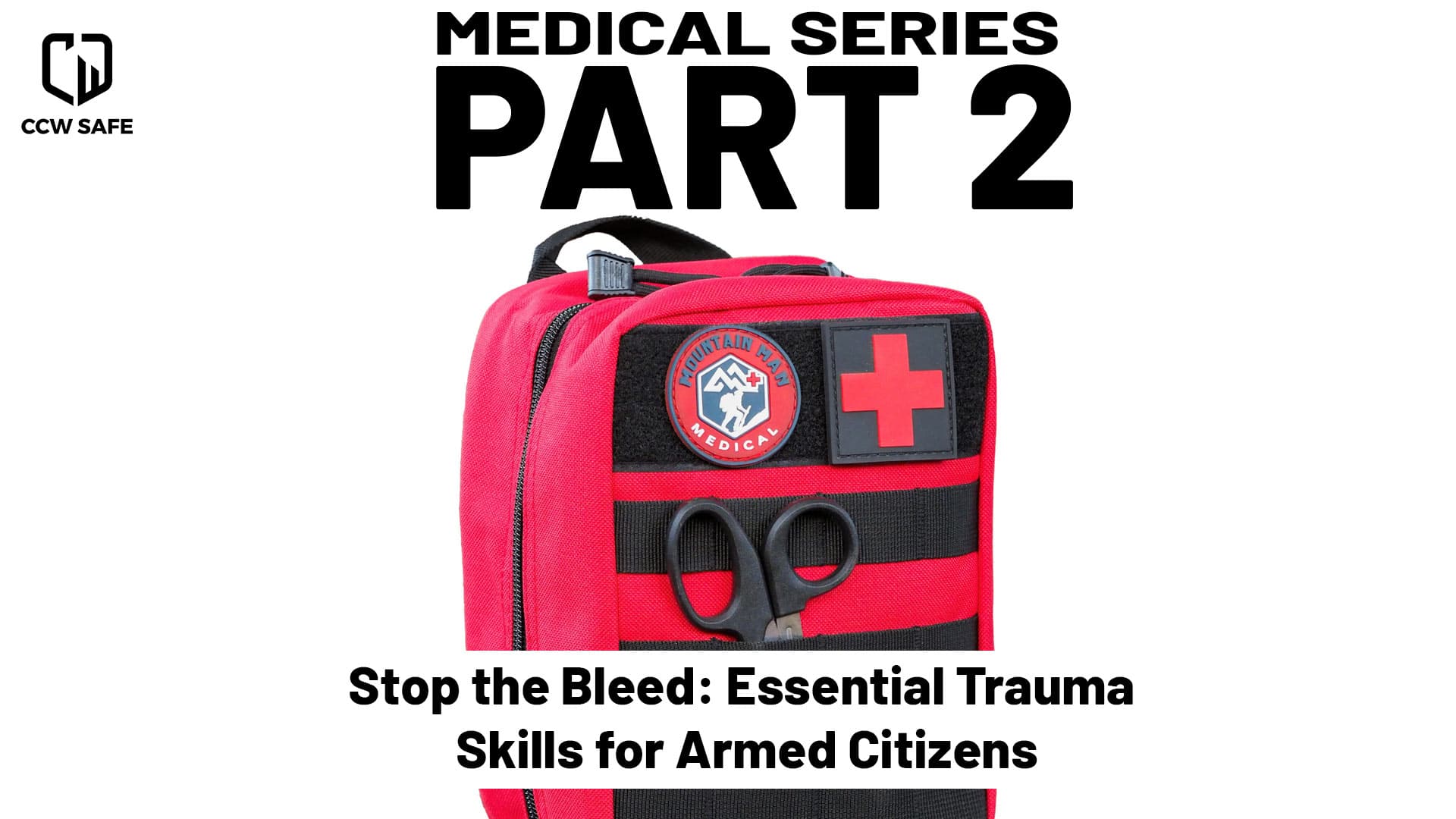
Medical Series Pt.2 – Stop the Bleed: Essential Trauma Skills for Armed Citizens
By: Jacob Paulsen from ConcealedCarry.com
In our previous article, we established a sobering reality: you’re statistically far more likely to save a life with medical skills than to need your firearm defensively. Now it’s time to move from statistics to action. Today we’ll cover the essential trauma skills that address the leading cause of preventable death in emergency situations.
The Reality of Preventable Death
Hemorrhage—severe bleeding—is the leading cause of preventable death in trauma situations. Whether it’s a car accident, workplace injury, or any other traumatic event, people die from bleeding that could have been stopped with immediate, proper intervention.
The critical timeframe is stark:
- Severe arterial bleeding: Death can occur in as little as 3-5 minutes
- Average EMS response time: 7-12 minutes nationally
- The gap: 2-9 minutes where your intervention is the difference between life and death
This gap is where your skills matter most. The techniques we’ll cover aren’t complex medical procedures—they’re straightforward, learnable skills that can be mastered and maintained with basic training and occasional practice.
Direct Pressure: Your First Line of Defense
Direct pressure is the foundation of bleeding control and your first response to any significant bleeding. It’s simple in concept but critical in execution.
The Technique:
- Expose the wound – Cut or tear clothing away to see what you’re dealing with
- Apply direct pressure – Use whatever clean material is available (gauze, cloth, even a t-shirt)
- Press firmly – Don’t be gentle; you’re trying to compress blood vessels
- Hold consistently – Maintain pressure without “checking” if it’s working
- Add layers – If blood soaks through, add more material on top (don’t remove the first layer)
When Direct Pressure Isn’t Enough:
- Bleeding continues despite firm, direct pressure for 2-3 minutes
- Blood is spurting or flowing rapidly
- The wound is in an area where you can’t maintain effective pressure
- You need to free your hands for other lifesaving measures
This is when you escalate to more aggressive interventions.
Tourniquets: When Bleeding Won’t Stop
A tourniquet is a device designed to completely stop blood flow to a limb by compressing all blood vessels. Modern combat medicine has proven that tourniquets are safe and effective when properly applied.
When to Apply a Tourniquet:
- Severe bleeding from an arm or leg that doesn’t respond to direct pressure
- Multiple casualties where you need to quickly control bleeding and move to the next person
- When you can’t maintain direct pressure (need hands free for other tasks)
- Partial or complete amputation of a limb
Proper Tourniquet Application:
- Place high on the limb – High up on the arm or leg, closer to the torso, avoiding joints
- Over clothing is fine – Don’t waste time removing clothes
- Tighten until bleeding stops – Not until it “feels tight,” until bleeding actually stops
- Note the time – Critical if transport will be delayed; less important when EMS is minutes away
- Don’t remove it – Leave tourniquet removal to hospital personnel
Critical Point: A properly applied tourniquet will be painful for the patient. If they’re not complaining about tourniquet pain, it’s probably not tight enough to be effective.
The North American Rescue Combat Application Tourniquet (C-A-T) and the TacMed SOF Tourniquet represent the gold standard in tourniquet design, with proven track records in both military and civilian applications. Mountain Man Medical carries both options, along with training on proper selection and application techniques.
Wound Packing: Stopping Junctional Bleeding
Some wounds occur in locations where tourniquets can’t be applied effectively. Wound packing involves inserting gauze directly into the wound to apply pressure from the inside.
When to Pack a Wound:
- Wounds in junctional areas (groin, armpit, neck) where tourniquets can’t be applied
- Major bleeding that continues despite proper direct pressure
- Wounds where the anatomy prevents effective external pressure alone
Wound Packing Technique:
- Expose the wound completely – You need to see what you’re doing
- Identify the source – Look for the specific point where blood is coming from
- Pack directly on the source – Don’t just fill the wound cavity, target the bleeding point
- Use plenty of gauze – It typically takes more than you think
- Apply pressure over the packing – The gauze directs your pressure to the right spot
- Hold for a minimum of 3 minutes – This allows clotting to begin
For a detailed demonstration of proper wound packing technique, watch this instructional video that shows the step-by-step process in realistic scenarios.
Equipment Matters: Standard gauze works, but hemostatic gauze like QuikClot Combat Gauze and Chitogauze from Mountain Man Medical contains agents that accelerate clotting, making your intervention more effective.
Chest Seal Applications: When Breathing Is Compromised
Penetrating chest wounds create unique problems. If the wound creates a hole through the chest wall, it can interfere with the lung’s ability to expand, creating a life-threatening condition.
Recognizing the Need for a Chest Seal:
- Penetrating wound to the chest
- “Sucking” sound coming from the wound
- Patient having difficulty breathing
- Obvious hole in the chest wall
Application Technique:
- Expose the entire chest – Check front, back, and both sides
- Clean around the wound – Wipe away blood and debris for good seal adhesion
- Apply the chest seal – Center it over the wound
- Ensure good adhesion – Press firmly around all edges
- Monitor breathing – Be prepared to “burp” the seal if pressure builds up
Mountain Man Medical carries proven chest seals from leading manufacturers, including the Hyfin series from North American Rescue, with both vented and non-vented options and clear instructions for proper application in high-stress situations.
Recognition: When to Act vs. When to Wait
Not every medical emergency requires your immediate intervention. Knowing when to act and when to step back is crucial for both safety and effectiveness.
Act Immediately When:
- There’s severe, uncontrolled bleeding
- The patient is unconscious and not breathing normally
- You’re first on scene and EMS is minutes away
- The patient is conscious and asking for help
Step Back When:
- EMS or more qualified medical personnel are already present
- The scene is unsafe (ongoing violence, fire, hazardous materials)
- The patient is conscious and refusing assistance
- You’re uncertain about the situation and waiting won’t significantly worsen the outcome
The Golden Rule:
Don’t become a victim yourself. Your first priority is always scene safety. You can’t help anyone if you become injured or put yourself in danger.
Building and Maintaining Your Skills
Reading about these techniques is just the beginning. These skills require hands-on practice to be effective when lives are on the line.
Start Your Training Journey:
Mountain Man Medical’s Free Online Emergency Trauma Course: The best place to start is with Mountain Man Medical’s comprehensive online Emergency Trauma Course. This free course covers all the essential techniques we’ve discussed and is available 100% online from any computer.
Additional Beginner Options:
- Stop the Bleed courses (available in most communities)
- Basic first aid and CPR certification through the Red Cross or similar organizations
Skill Maintenance:
Practice these skills regularly and seek ongoing training opportunities to maintain proficiency. Important: Use dedicated training supplies for practice—never train with your actual EDC medical gear. Keep your emergency supplies sealed and ready while using separate training materials to build and maintain your skills.
The Reality Check
These skills aren’t theoretical for armed citizens. Traffic accidents, workplace injuries, falls, and countless other scenarios occur daily where your immediate intervention could save a life. Unlike the defensive use of a firearm—which you may never need—these medical skills have a statistical certainty of being useful during your lifetime.
The techniques we’ve covered today address the most common causes of preventable death in emergency situations. They’re not complex medical procedures requiring years of training; they’re straightforward skills that can be learned in hours and maintained with occasional practice.
In our next article, we’ll explore additional medical gear beyond the tourniquets, hemostatic gauze, and chest seals we’ve discussed today. We’ll cover supplies for different applications, how to organize your equipment for various scenarios, and how to find prebuilt kits that support your specific mission and goals.
Ready to move from knowledge to hands-on practice? Start with Mountain Man Medical’s free online Emergency Trauma Course that covers these techniques in detail. Also subscribe to their YouTube channel for technique demonstrations and equipment reviews.
Remaining parts to this series: