Posted on June 4, 2026
EmpowerHER 5: Choosing the Right Self Defense Tool
By: Karen Hunter
How to Choose the Right Self Defense Tool
No tool guarantees safety, and no single class will prepare you overnight. The real win is avoiding danger through awareness and smart choices. When threats arise, tools can create distance and time to escape. Firearms with proper training remain the strongest equalizer, but the best tool is one you will carry consistently, train with, and deploy confidently under stress.
Not every woman feels ready for a firearm, and that’s okay. Pushing someone toward a tool they’re uncomfortable with can create hesitation that costs critical seconds. For those not prepared for lethal force, non-lethal and less-lethal options give many women a viable chance when paired with realistic training. The key to choosing what is best for you is an honest self-assessment of your comfort level, training commitment, and protection needs.
Where is your comfort level? You may be ready to incorporate a firearm. If not, you can start where you are currently comfortable. Non-lethal and less-lethal options build skills and confidence toward utilizing firearms. When paired with continuing education and training, this can be a valuable starting point.
Make a genuine determination of the amount of responsibility and time you are willing to dedicate to ongoing training and education, what you can honestly commit to. Will you train monthly, clean and maintain, and stay up to date with current laws? The sad reality is that many people purchase a firearm, then store it and never use it. Or worse, carry it, without training on how to use it or understanding how to maintain it.
Understand who is underneath your umbrella of protection. Know who you are responsible for protecting. It may just be you, or maybe you have children with you. This could make creating distance and escape more difficult, making a lethal or a stronger, less lethal option more advantageous.
To help you weigh your choices, I want to discuss a few tools that cover this spectrum. It is imperative to understand that not all self-defense tools are created equal. A safe outcome is never guaranteed. They all require training, and non-lethal and less-lethal options will, at best, hopefully create space and buy you time to get away. Staying strong in your situational awareness and avoidance skills is always the primary goal.
Pepper Spray: Accessible but Not All Equal
Many inexpensive keychain sprays fail under real conditions. Low concentration, short range (often under 10 feet), and aerosol mist that blows back in the wind or cross-drafts can leave you vulnerable. Traditional sprays also suffer from leakage, pressure loss in heat/cold, and inconsistent delivery.
The Kimber PepperBlaster series stands out. The PepperBlaster 3 and II use a pyrotechnic system to fire two powerful bursts of 10% OC gel up to 13 feet at 112 mph. This gel formula, 2.4% major capsaicinoids, sticks to the target with minimal blowback, unlike aerosols. Effects can disable an attacker for 45 minutes. It’s compact, water-resistant, has fixed sights for aiming, and includes a pocket clip. Shelf life is about 4-5 years. Strong alternatives include SABRE Red Pepper Gel, high police-grade strength, reduced blowback, good range, and POM or Fox Labs options for compact carry. Look for gels over mists for wind resistance and higher major capsaicinoid percentages.
Tasers: Probe-Delivery Incapacitation
True tasers differ from contact stun guns. They fire two barbed probes connected by wire, delivering electrical pulses that override muscle control, causing neuromuscular incapacitation (NMI). This drops most people regardless of pain tolerance, unlike stun guns that rely on pain compliance and fail through thick clothing.
Civilian models like the TASER Pulse or Bolt 2 are compact, reloadable single-shot (or limited multi-shot) devices designed for personal carry. Effective range is typically 15 feet. Cycles often last 30 seconds, providing escape time. Some include laser sights and app connectivity for alerts.
Byrna Non-Lethal Launchers: Versatile Projectile Defense
The Byrna SD and similar models, such as the TCR, are CO2-powered launchers that fire pepper balls, kinetic rounds, or inert projectiles. It bridges pepper spray and firearms with pistol-like handling, longer effective range (up to 60+ feet for some rounds), and multi-shot capacity.
With most .68-caliber launchers, the CO2 cylinder is punctured when it is loaded into the launcher. Over the next 24 hours, the CO2 will leak out, rendering the weapon inoperable. In response, Byrna developed its patented first-shot, pull-pierce technology. This allows the CO2 cylinder to remain in the launcher, unpunctured, until needed. Then, when the trigger is pulled, the CO2 cartridge is punctured, and the projectile is fired simultaneously, keeping the Byrna always at the ready, whether it has been sitting for a week, a month, a year, or several years.
The Byrna SD and EP have a 60’ effective range, and the Byrna LE has an 80’ effective range.
Byrna’s handheld pistols carry up to seven rounds in a magazine and can fire multiple magazines from a single CO2 cylinder. Stun Guns, by comparison, are limited to just one or two shots. The ability to fire multiple shots without reloading allows the user to put multiple rounds on target and/or confront multiple threats simultaneously.
Firearms: The Ultimate Equalizer
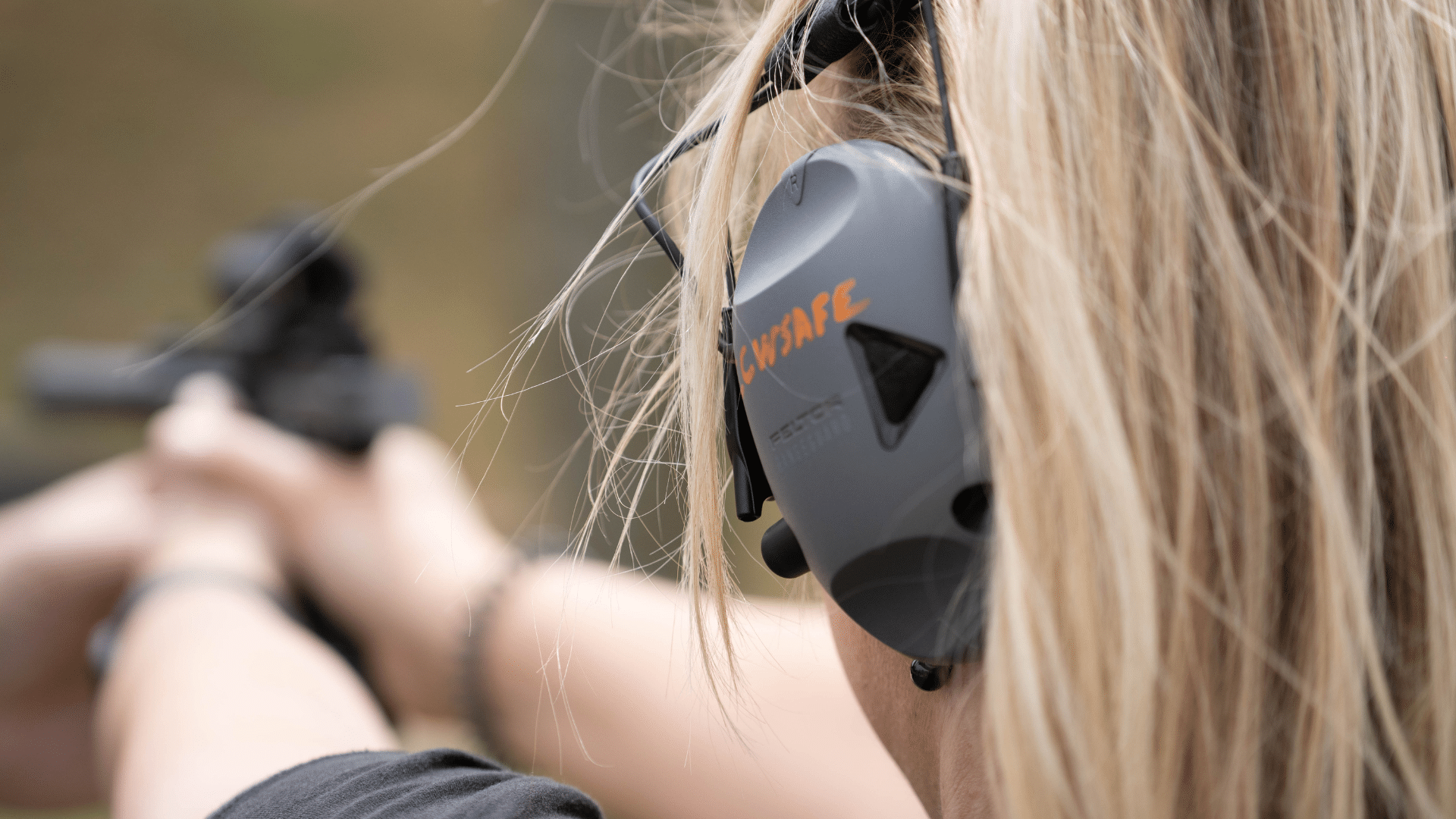
A handgun, when carried and properly trained with, offers serious stopping power in life-threatening situations. It levels physical disparities better than any other tool. However, it’s lethal. This brings additional responsibilities: safe storage, especially with children; education on use-of-force laws; and ongoing training to prevent accidents or misuse.
Choose a reliable, concealable pistol in a manageable caliber. I recommend 9mm, which is often recommended for capacity and manageable recoil. Prioritize fit, ease of gun manipulation, ability to shoot the firearm, reliability, and quality carry options. Training should cover draw, malfunction clearances, accuracy under stress, and legal aspects. Women-specific classes help address grip, stance, and mindset.
It is crucial to train with the tool you choose. Practice your draw from your carry position to build fast access skills. incorporate scenario drills, force-on-force training if possible, and regular live-fire or simulation exercises. Situational Awareness, avoidance, and de-escalation remain your first lines of defense.
While many women carry pocket knives, I did not include them with these examples as they are not a primary recommendation. Knives require closing distance, the opposite of ideal self-defense. Knife fights are chaotic, bloody, and often result in mutual destruction. Use only as an absolute last resort after distance is lost, and only with dedicated knife-fighting training. Focus on tools that preserve space.
Tools enhance options; they don’t replace judgment. Self-defense prioritizes survival and escape. Carry what you understand, train with, and will actually use. Reassess as your life changes. Stay vigilant, train consistently, and choose empowerment through preparation.
More from the EmpowerHER Series
Explore additional articles and videos designed to help women think more intentionally about personal safety, preparedness, and self-defense.
Part 1
EmpowerHER 1: From Damsel to Defender Part 1
Part 2
EmpowerHER 2: Series Introduction and Women on the Street
Part 3
EmpowerHER 3a: Situational Awareness and Avoidance
EmpowerHER 3b: Damsel to Defender Part 2
Part 4
EmpowerHER 4a: Physical Readiness
EmpowerHER 4b: You Don’t Need to Be Strong – You Need to Be Ready