Posted on November 17, 2025
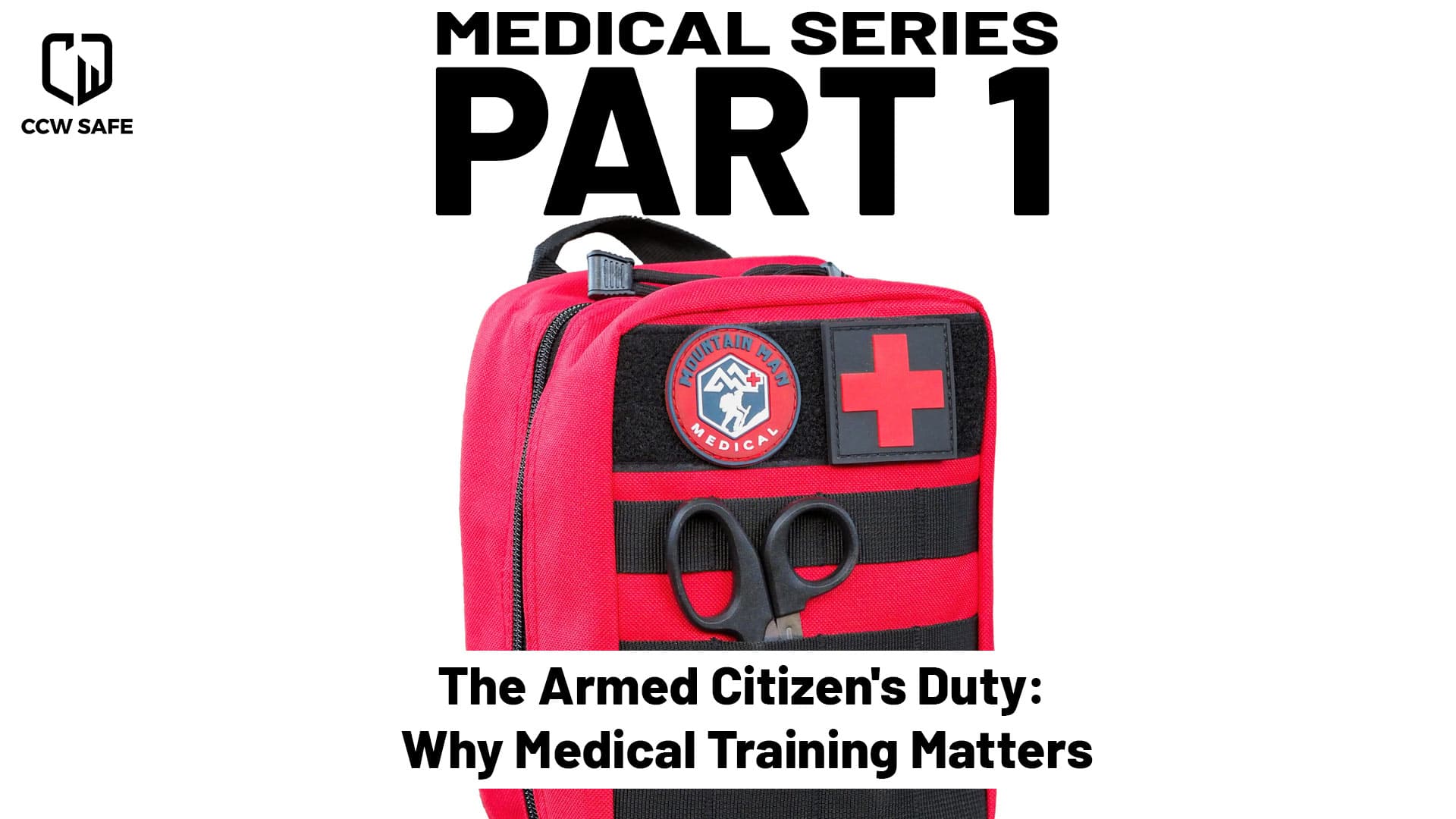
Medical Series Pt. 1 – The Armed Citizen’s Duty: Why Medical Training Matters
By Jacob Paulsen of ConcealedCarry.com
If you carry a firearm for protection, you’ve already acknowledged that bad things can happen to good people. You’ve taken responsibility for your safety and that of your loved ones. But here’s a sobering reality that most armed citizens never consider: you are statistically far more likely to save a life with medical skills than you are to need your firearm in a defensive encounter.
This isn’t an argument against carrying a firearm. It’s an argument for being truly prepared.
The Numbers Don’t Lie
Let’s examine the statistics that should reshape how every armed citizen thinks about preparedness:
Defensive Gun Uses (DGUs): Even the most generous estimates place defensive gun uses at 1-3 million annually in the United States. However, most of these encounters never involve firing a shot. The FBI reports roughly 200-400 justifiable homicides by private citizens annually, with justified shootings (including non-fatal) estimated between 1,000-2,000 incidents per year.
Medical Emergencies: Every year in the United States:
- 356,000 people experience out-of-hospital cardiac arrest
- 3.8 million emergency department visits involve trauma
- 190,000 deaths occur from unintentional injuries
- 61,000 people die from traumatic bleeding that could potentially be stopped
Here’s the stark reality: For every justified defensive shooting by a private citizen, there are approximately 150-300 medical emergencies where immediate intervention could save a life.
But the statistics become even more compelling when we narrow the focus to situations where an armed citizen might realistically encounter them.
When Worlds Collide: Armed Citizens and Medical Emergencies
Consider these scenarios that happen thousands of times each year:
- Traffic accidents where armed citizens are first on scene
- Workplace incidents at your job, during business visits, or while patronizing establishments
- Public spaces where someone suddenly collapses or is injured
- Home emergencies affecting family, neighbors, or visitors
- Natural disasters where emergency services are overwhelmed
The average armed citizen will encounter multiple medical emergencies during their lifetime where their immediate action could mean the difference between life and death. Meanwhile, that same citizen has less than a 1% chance of ever needing to draw their firearm in defense.
If you’re prepared to take a life to save a life, shouldn’t you be equally prepared to save a life directly?
The Moral Imperative
Carrying a firearm represents more than personal protection—it embodies a commitment to the preservation of innocent life. This commitment doesn’t end with the ability to stop a threat; it extends to the preservation of life in all its forms.
When you make the conscious decision to carry a tool designed to stop threats, you’re accepting a level of responsibility that goes beyond yourself. You’re acknowledging that in the gravest extreme, you may need to make life-or-death decisions. That same mindset should extend to being prepared when life hangs in the balance due to accident, illness, or injury.
The warrior mindset that drives many to carry firearms should logically extend to medical preparedness. True warriors protect life—they don’t just take it when necessary. They preserve it whenever possible.
The Training Gap
Here’s an uncomfortable truth: While the armed citizen community excels at discussing firearms, tactics, and legal considerations, medical training is often left out of the preparedness conversation entirely.
Consider the typical concealed carry permit holder’s training focus:
- Firearms proficiency: Regular range time, defensive shooting courses, equipment upgrades
- Legal education: Understanding use-of-force laws, staying current on legal changes
- Tactical awareness: Situational awareness, threat assessment, defensive positioning
- Medical training: Often completely absent from the discussion
This represents a significant gap in an otherwise comprehensive approach to preparedness. What makes this gap particularly puzzling is that basic life-saving medical skills are arguably simpler to learn and maintain than achieving proficiency with a handgun.
Think about it: Learning to apply a tourniquet effectively takes minutes to learn and can be maintained with occasional practice. Mastering accurate shooting under stress takes years of dedicated training. Yet we often see armed citizens who can deliver precise shots at 25 yards but have never learned to stop severe bleeding.
Mountain Man Medical’s training data reflects this disconnect. In their experience providing medical education to armed citizens, they’ve found that students often express surprise at how straightforward and learnable essential trauma skills are, especially compared to the complexity of firearms proficiency they’ve already mastered.
Building a Culture of Complete Preparedness
The armed citizen community has built an impressive culture around firearms proficiency, legal knowledge, and tactical awareness. It’s time to extend that same dedication to medical preparedness.
This means shifting from a mindset of “what if I need to stop a threat?” to “what if I need to save a life?” Both are valid, both are important, and both deserve our serious attention and preparation.
Taking the Next Step
If the statistics in this article have challenged your thinking about preparedness priorities, you’re not alone. Many armed citizens experience this “aha moment” when they realize how much more likely they are to need medical skills than defensive shooting skills.
This article is just the beginning of building your complete preparedness foundation. In the coming articles, we’ll take you through everything you need to know to bridge this critical gap:
Next up: “Stop the Bleed: Essential Trauma Skills for Armed Citizens” – We’ll cover the hands-on techniques that can save lives in the critical minutes before help arrives. From proper tourniquet application to wound packing and chest seal placement, you’ll learn the core skills that address the leading causes of preventable death. We’ll also provide you with specific training resources and courses to build and maintain these vital abilities.
Following that: “The Armed Citizen’s Medical Kit: Essential Equipment and Setup” – Having the skills means nothing without the right tools. We’ll break down what medical supplies you should carry daily, what to keep in your vehicle, and how to build a comprehensive home medical kit. From budget-conscious basics to professional-grade equipment, you’ll learn how to select, organize, and maintain the gear that turns your knowledge into life-saving capability.
Finally: “Legal Considerations: Rendering Aid as an Armed Citizen” – Understanding your legal protections and obligations when providing medical aid is crucial. We’ll explore Good Samaritan laws, scope of practice limitations, documentation requirements, and how to interact with law enforcement when you’ve provided medical assistance. This knowledge protects both you and those you’re trying to help.
Whether you’re starting from zero medical knowledge or looking to formalize existing skills, this series will provide you with a clear path forward. Your commitment to protecting life shouldn’t end with your ability to stop threats—it should extend to your ability to preserve life in all the situations you’re statistically likely to encounter.
Remaining parts to this series: