Posted on November 17, 2025
Medical Series Pt.3 – The Armed Citizen’s Medical Kit: Essential Equipment and Setup
By: Jacob Paulsen from ConcealedCarry.com
Editor’s Note: This is the third article in a 4-part series on medical preparedness for armed citizens. In our previous article, we covered essential trauma skills including tourniquets, hemostatic gauze, and chest seals. Now we’ll explore the specific equipment needed to build effective trauma kits.
You’ve learned why medical training matters statistically, and you’ve been introduced to the essential trauma skills that save lives. Now it’s time to build the equipment foundation that transforms your knowledge into real-world capability. But before we dive into specific gear, it’s crucial to understand a fundamental distinction that many armed citizens miss entirely.
Trauma Kits vs. Traditional First Aid Kits: Understanding the Difference
Walk into any big box store and you’ll find shelves lined with “first aid kits” filled with adhesive bandages, antiseptic wipes, and pain relievers. These traditional first aid kits are designed for minor injuries—cuts, scrapes, headaches, and everyday mishaps. They’re perfectly adequate for handling a child’s scraped knee or a small kitchen burn.
Trauma kits serve a completely different purpose.
Trauma kits are designed to address life-threatening injuries that require immediate intervention to prevent death. While a first aid kit helps with comfort and minor wound care, a trauma kit stops severe bleeding, manages airway problems, and addresses the types of injuries that kill people in minutes if left untreated.
The medical emergencies we discussed in Articles 1 and 2—severe bleeding from accidents, penetrating injuries, and traumatic wounds—require trauma-specific equipment that simply isn’t found in traditional first aid kits. You won’t stop arterial bleeding with adhesive bandages, and you can’t manage a sucking chest wound with antiseptic wipes.
This distinction matters because armed citizens need to be prepared for life-threatening medical emergencies that require immediate intervention. Trauma kits aren’t about treating injuries at home—they’re about sustaining life long enough to get the injured person to a higher level of care. The goal is preventing death in the critical minutes before professional medical help arrives.
The Baseline Trauma Kit: The Yellowstone Standard
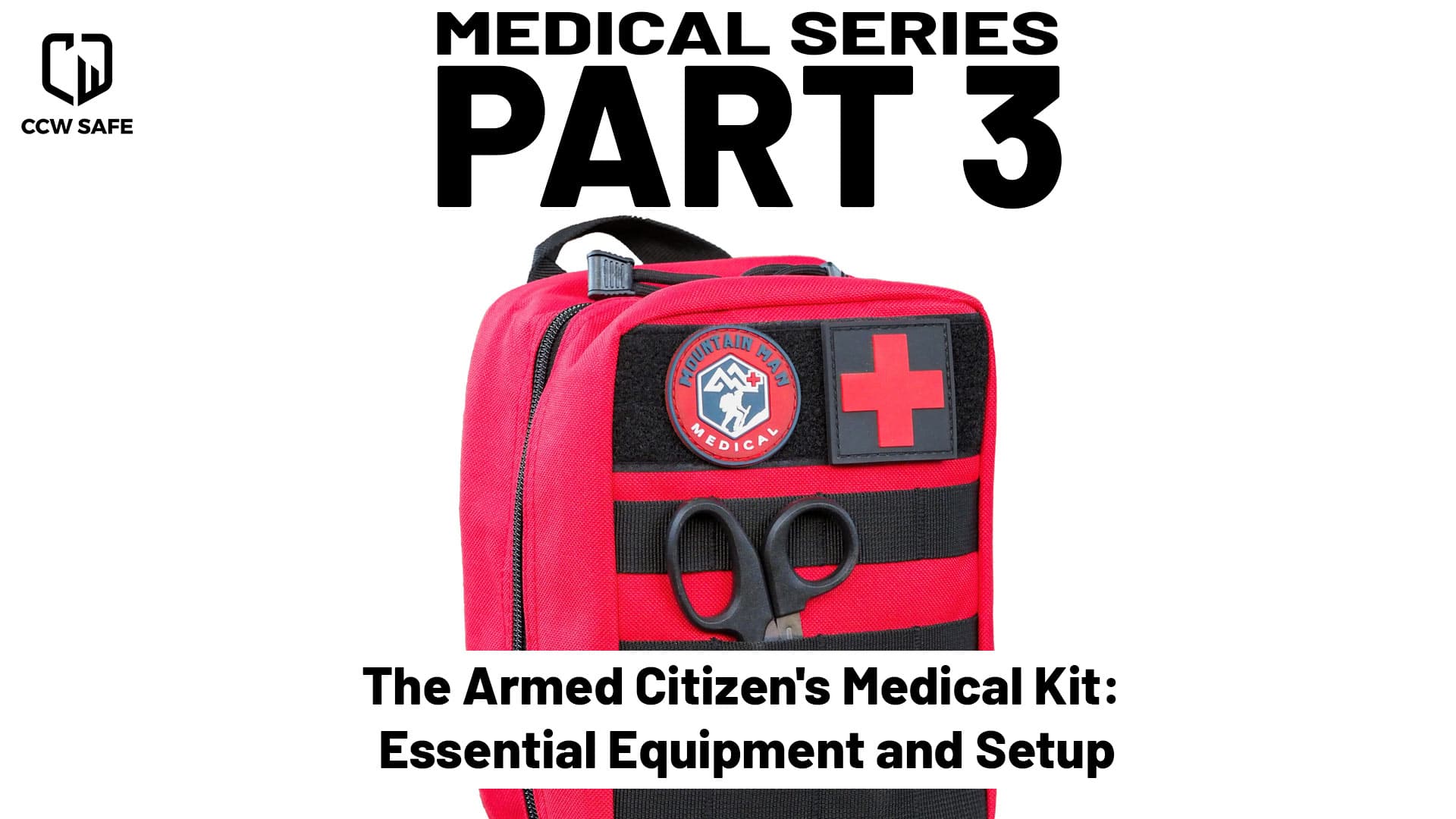
To understand what belongs in an effective trauma kit, let’s examine Mountain Man Medical’s Yellowstone Trauma Kit—their top-selling individual trauma kit that represents the perfect baseline for what you need in a trauma response setup.
The Yellowstone contains exactly what you need to address the major causes of preventable death in trauma situations, without unnecessary bulk or redundant items. Here’s what’s inside and why each component matters:
Core Bleeding Control Components:
Tourniquet: The most critical component for stopping severe extremity bleeding when direct pressure fails. As we covered in Article 2, tourniquets completely stop blood flow to arms or legs, buying crucial time for further treatment. The Yellowstone includes the North American Rescue Combat Application Tourniquet (C-A-T), which has the most proven track record in both military and civilian applications. The TacMed SOF Tourniquet is another excellent choice with similar effectiveness.
Chest Seal: Penetrating chest wounds require immediate sealing to prevent life-threatening complications like tension pneumothorax. The Yellowstone includes North American Rescue Hyfin Compact Chest Seals, which provide reliable occlusion with easy application under stress. HALO chest seals, FoxSeals, and H*Vents seals are also great choices, though bulkier than the Hyfin compact seals.
Hemostatic Gauze: This specialized gauze accelerates clotting for wound packing in junctional areas where tourniquets can’t be applied. The Yellowstone includes ChitoGauze, which uses chitosan to enhance clotting. QuikClot Combat Gauze with kaolin is another proven hemostatic agent. As we discussed in Article 2, standard gauze works, but hemostatic agents make your intervention significantly more effective.
Pressure Bandage: A specialized bandage that combines multiple functions into one easy-to-apply device for maintaining pressure over wounds. The Yellowstone includes the TacMed Compact Trauma Bandage, which provides excellent pressure and securing capability. Israeli Bandages and OLAES bandages are other effective pressure bandage options, though typically larger than the compact version included here.
Essential Support Gear:
Two Pairs of Nitrile Gloves: Barrier protection for both you and the patient. Two pairs ensure you have backup if the first pair tears, and allows you to maintain sterile technique.
Compact Trauma Shears: You can’t treat what you can’t see. These heavy-duty shears cut through clothing, seatbelts, and other materials to expose wounds quickly.
Non-treated Compressed Gauze: Standard gauze for general wound care, cleaning, and supporting the hemostatic gauze when wound packing.
Elastic Wrap Bandage: Provides securing pressure over dressings and can be used for splinting support.
Mini Marker: Critical for marking tourniquet application time and patient information.
Every item in the Yellowstone serves a specific, evidence-based purpose in trauma care. There are no “filler” items, no redundant components, and no gear included just to make the kit look more comprehensive.
The Quality Problem: Why Amazon “Deals” Can Cost Lives
Here’s a critical warning that could save your life or someone you’re trying to help: never buy critical trauma gear from Amazon or unknown sellers, no matter how attractive the price.
The trauma equipment market is flooded with imported counterfeit gear designed to look like proven medical devices while providing none of the reliability. These knockoffs are specifically targeted at people who don’t know the difference between genuine life-saving equipment and dangerous imitations.
Common Problems with Cheap “Trauma Kits”:
Fake Tourniquets: Counterfeit CAT tourniquets that break under pressure, have weak windlasses, or use inferior materials that fail when lives depend on them.
Ineffective Hemostatic Agents: Hemostatic gauze knockoffs that contain little to no active clotting agents, providing no advantage over standard gauze.
Substandard Chest Seals: Chest seals that don’t adhere properly, don’t maintain seal integrity, or use inferior materials that fail in critical moments.
Diluted “Value” Kits: $50 “trauma kits” that include genuine trauma items mixed with dozens of basic first aid supplies like Q-tips, alcohol pads, and adhesive bandages to make the kit appear more valuable while actually diluting its trauma capability.
The Real Cost of “Savings”:
When you buy a counterfeit tourniquet to save $20, you’re not just risking equipment failure—you’re risking someone bleeding to death while you struggle with gear that doesn’t work. The difference between a genuine CAT tourniquet and a counterfeit could literally be the difference between life and death.
Mountain Man Medical sources all components directly from the original manufacturers—North American Rescue, TacMed, Combat Medical, and other proven medical companies. When you buy from Mountain Man Medical, you’re getting genuine equipment with the reliability and performance that emergency situations demand.
Expanding Capability: The Wind River and BaseCamp Approach
Once you understand the baseline trauma capability provided by the Yellowstone, you might want to expand your kit for specific situations or enhanced capability. Mountain Man Medical’s Wind River and BaseCamp kits demonstrate how to thoughtfully add capability beyond the baseline.
Additional Components for Enhanced Capability:
Mylar Rescue Blanket: Prevents hypothermia and shock—secondary killers that can claim victims even after you’ve controlled bleeding.
Nasopharyngeal Airway (NPA): Simple airway management tool for unconscious patients. Easy to use and incredibly effective for maintaining open airways.
Moldable Splint: Fracture stabilization for broken bones that could cause additional injury during transport or movement.
Burn Dressing: Specialized treatment for thermal injuries that require different care than traumatic wounds.
Cravat Bandages: Multipurpose triangular bandages useful for splinting, wound covering, and securing other equipment.
Medical and Duct Tape: Securing dressings, equipment, and providing emergency repair capability.
Enhanced Bleeding Control: Additional tourniquets for multiple casualties, larger pressure bandages like Israeli Bandages or OLAES bandages for more extensive wounds, and increased quantities of hemostatic and standard gauze.
When Enhanced Kits Make Sense:
Vehicle Kits: The Wind River or BaseCamp kits excel as vehicle-based medical capability where space isn’t as constrained as EDC requirements.
Home Emergency Preparedness: Comprehensive kits provide capability for multiple family members and extended scenarios.
Group Activities: When responsible for others during hiking, hunting, or other activities where enhanced medical capability is valuable.
Professional Requirements: Security professionals, off-duty law enforcement, or others with enhanced responsibility for others’ safety.
Kit Organization and Accessibility
The best trauma kit is worthless if you can’t access its contents quickly under stress. Organization matters as much as equipment selection.
Building Staged Capability:
As budget allows over time, it makes sense to have multiple trauma kits staged where you’re most likely to need them. Different locations allow for different kit configurations based on space constraints and specific applications.
Vehicle Staging: The Wind River makes an excellent vehicle kit where space permits expanded capability beyond basic bleeding control.
Outdoor Applications: The BaseCamp was specifically designed for outdoor adventures where you might be far from professional medical care and need enhanced self-sufficiency.
On-Body EDC: For those wanting an on-body everyday carry option, Mountain Man Medical offers the Ankle IFAK that provides low-profile trauma capability without interfering with other gear.
Home Staging: Home-based kits can include expanded quantities and larger components since concealment and weight aren’t concerns.
Each staged location allows you to optimize kit contents for that specific environment and use case, building comprehensive medical capability wherever you might encounter emergencies.
Building Your Trauma Capability
Start with proven, quality equipment rather than trying to save money on critical gear. The Yellowstone provides excellent baseline capability, while the Wind River and BaseCamp offer enhanced options for specific requirements.
Recommended Approach:
Phase 1: Start with a quality baseline kit like the Yellowstone that covers all essential trauma interventions.
Phase 2: Add enhanced capability based on your specific needs, training level, and carrying requirements.
Phase 3: Develop multiple kits for different applications (EDC, vehicle, home) rather than trying to create one kit that does everything.
Phase 4: Maintain and practice with your equipment regularly to ensure it’s ready when needed.
Remember: trauma equipment saves lives only when it’s genuinely effective and immediately accessible. Quality matters more than quantity, and proven gear matters more than bargain prices.
In our final article, we’ll explore the legal considerations every armed citizen should understand when providing medical aid, including Good Samaritan protections, scope of practice limitations, and proper documentation.
Remaining parts to this series: